2025-2026 Institute of Ecotechnics receives a grant from the Water Resources Research Institute, Las Cruces, NM with the support of the Santa Fe Pojoaque Soil and Water Conservation District to be managed by Dr. Starrlight Augustine. This project aims to build long-term water resilience and soil health through four integrated objectives:
Increase water efficiency and optimize use of limited supplies.
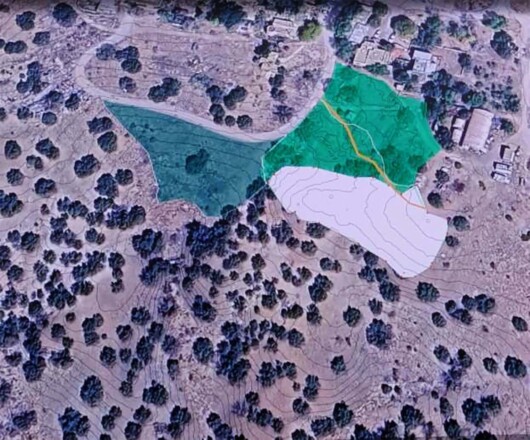
The reconfiguration of several fields at Synergia Ranch to follow natural landforms, improving infiltration and reducing runoff. Roads will be upgraded to serve as water-harvesting features, channeling rainfall into productive use. Dedicated wildlife water points and habitat will be established to draw animals away from cash crops and reduce damage to irrigation lines. To initiate planting, we will implement intensive bale grazing.
Improve the reliability of water supply and infrastructure.
A 90-year old 10,000-gallon underground cistern was repaired and brought back into operation to capture rainwater from multiple roof surfaces, including the Grow Hole structure (a basement converted into a greenhouse). The cistern was equipped with a pumping plant, WiFi-enabled electric valve boxes, and a flow meter, enabling precise control of irrigation. Well water will remain available as a supplemental source during prolonged dry periods.
Support the transition to drought-tolerant, low water-use crops.
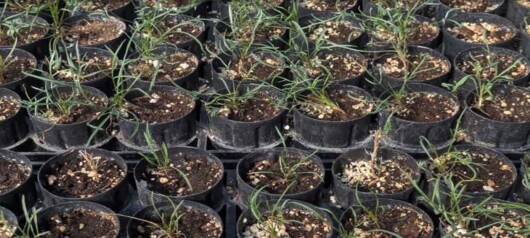
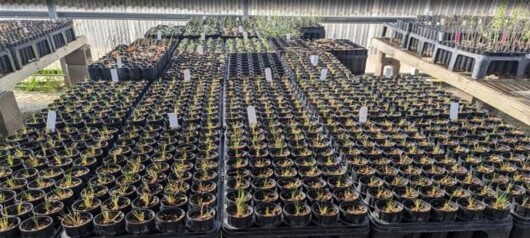
Together with Santa Ana Pueblo nursery, 4,800 native plants were propagated and grown, including eight key drought-resilient grass species,across the 1-acre agricultural field. This will ecologically restore the previously cropped farming land and is a model for climate-adapted planting systems.
Increase operational flexibility to adapt to drought and climate variability.
The project helps diversify on-farm income streams and ecological functions by harvesting native seed from established plantings and exploring opportunities for contract growing. These activities not only build resilience to climate stressors but also create scalable, low-input systems suited to arid and semi-arid regions.
Together, these strategies will enhance the farm’s capacity to adapt to current and future water challenges while contributing to the broader restoration of regional agroecological systems.
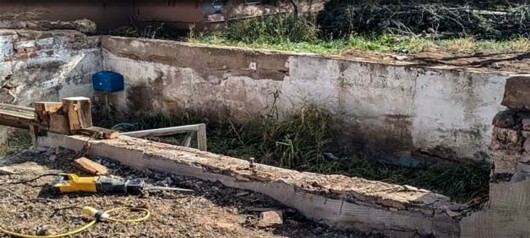
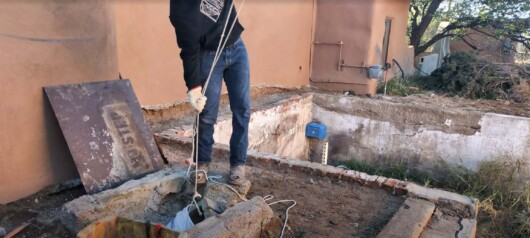
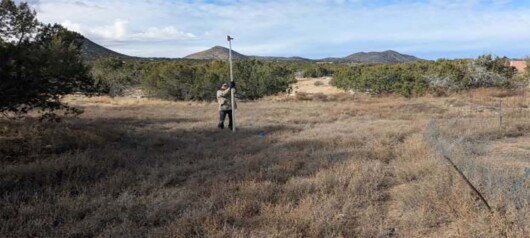
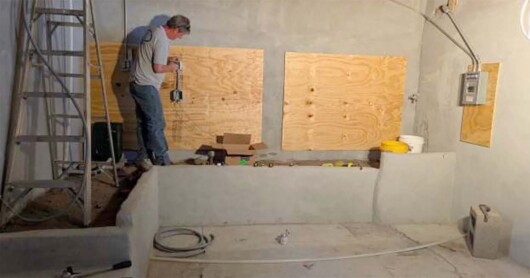
Oct 14th: Future pumping plant location
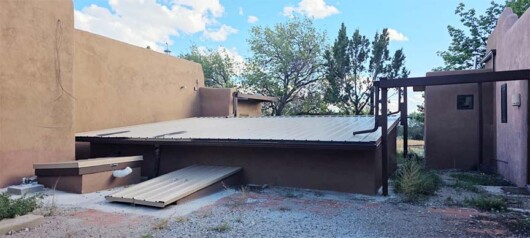
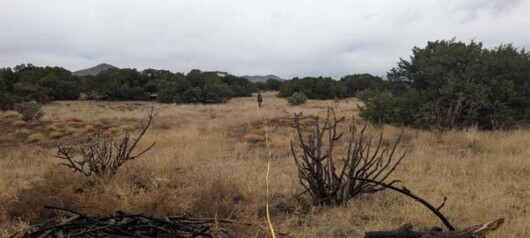
Oct 14th: State of the water collection area at the start of the work to build a 400 sq ft catchment roof.
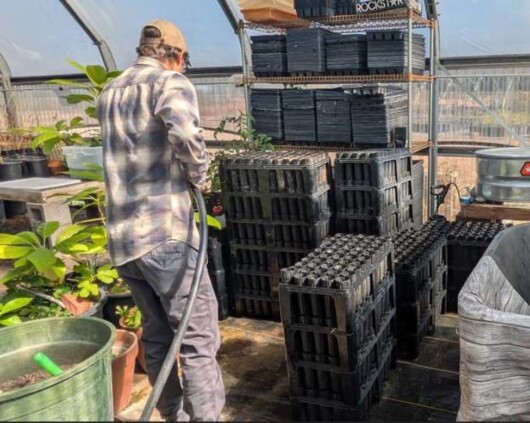
Oct 20th: Santa Ana Native Plant Nursery. Chris Chavez and Starrlight Augustine cleaning the 4,800 forestry pots and roottrainers for the project starts. The cones and roottrainer books are provided in kind by the Institute of Ecotechnics for the project.
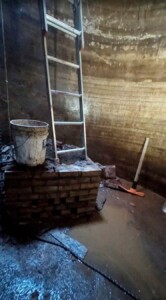
Oct 16th – view from bottom of cistern. The old brick filter is going to be removed. The walls repaired with fast hardening cement.
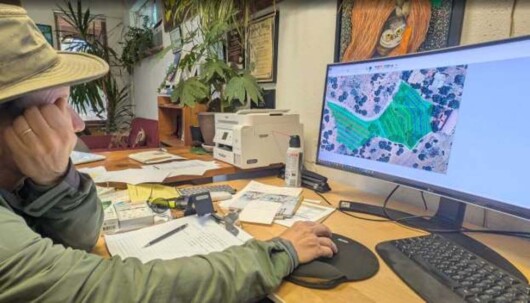
Jan 07 Final Field layout in green that works best with the local topography. Up is north. Thin black lines represent 1 ft contours.
Nov 05 2025 Synergia Ranch. Center new Catchment Roof. Left: roof over fully repaired cistern. Right new gutter system collecting rain water from the left house onto the catchment roof.
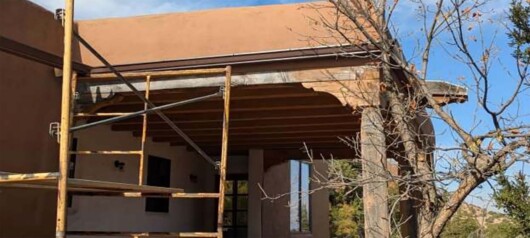
Nov 06: scaffolding around guttering of the house to the left in above image that will lead water to the catchment roof.
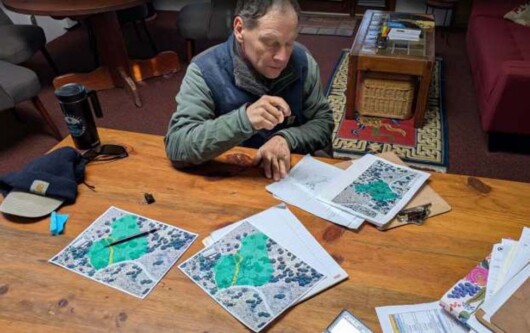
Jan 07 Jan-Willem Jansens determining the best layout for the field.
April 01: Jan-Willem Jansens and Starrlight Augustine working on the planting patterns and defining contours in the field
Dec 03. Jan-Willem Jansens and Starrlight Augustine determining the field boundaries, drainage ditches and keyline pattern- part I.
April 01. Drawing the lines in the field.
March 12: close up of the cota starts.
Jan 09: the field that has all the flags that determine the position of the new water harvesting road, the boundaries, the drainage ditches is under snow. More water melts on roofs and collects in the cistern.
April 23: Kuckelman installing the DAB pump
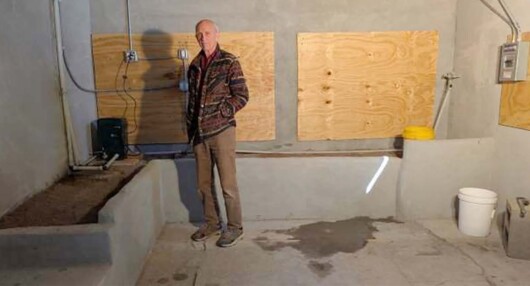
April 23: William F Dempster in front of the DAB pump (bottom left) which is fully tested and has dual well and rainwater fed tank water.