
Wastewater Gardens
The Wastewater Garden system approach arose from the experience with water treatment and reuse in Biosphere 2, a virtually air-tight mini world in Arizona. That initial constructed wetland for over two years from 1991-1993 successfully treated and recycled the wastewater from humans, domestic animals and laboratory/workshops and sent its remaining nutrients and freshwater back to the facility’s farm. Thus all nutrients and water were continually purified and recycled. The constructed wetland increased plant biodiversity, provided additional habitat and beauty and were harvested as fodder for the domestic animals.
Mark Nelson, one of the biospherian crew, managed and researched the Biosphere 2 system. He was inspired to bring this approach, which combines natural ecological process with engineering expertise, to the world. There is growing concern worldwide about human health and environmental degradation caused by sewage pollution, and the recognition of the limited resources we have of of clean, potable water.
After completing an M.S. degree in Watershed Management at the University of Arizona and a PhD in Environmental Engineering Sciences at the University of Florida, he worked with the Institute of Ecotechnics and the Biosphere Foundation, to implement the approach in a wide variety of climatic and environmental contexts. In the years since initial research and applications along the Yucatan Peninsula in Mexico, the technology has evolved and been implemented in 14 countries around the world, from cold climates like the Carpathian Mountains of Poland, to the wet tropics (e.g. Indonesia, Belize, the Philippines) and hot, arid deserts (Algeria, Iraq) and tropical savannahs (for Aboriginal and remote communities in Australia)
The high economic and ecological costs of centralized sewage treatment – pump stations, high-tech treatment plants with machinery and use of chemicals, ending with “disposal” rather than reuse of the water – is in contrast to the benefits which can be realized from intelligent design of small, decentralized and on-site treatment and reuse systems. The original concept of Wastewater Gardens – high biodiversity subsurface flow wetlands – has evolved so that total reuse of wastewater is the goal. Treated water from the constructed wetland is used for subsoil irrigation of “ecoscapes” adapted to the landscape and climate, affording more uptake of remaining nutrients and reuse of the freshwater. These ecoscapes can use native and “bushtucker” plants; or to grow shrubs and trees which can provide fruits, timber, fiber, medicinals and landscape enhancing vegetation. This is a way for the local community, the stake-holders, to shape the technology to their needs and desires.
Wastewater Gardens has become a division of the Institute of Ecotechnics as the approach exemplifies win-win scenarios, meeting human needs while safeguarding and enriching local ecosystems.
Closing the loop in our global biosphere will be more difficult than it was in Biosphere 2, but the challenge is the same – water conservation and reuse are key elements for both human and biospheric health
Our Impact
WWGI has successfully implemented these systems in 14 countries: Poland, the Philippines, Spain, France, Portugal, U.S. (Puerto Rico), Mexico, Belize, Indonesia, Australia, Algeria, Iraq, New Zealand, the Bahamas. Our work proves that a more natural, cost-effective, and sustainable approach to wastewater management is possible, protecting both human health and vital ecosystems.
WasteWaterGardens International Website
Project Eden in Iraq
Prof. Meridel Rubenstein and Dr. Davide Tocchetto, Project co-directors, Dr. Mark Nelson consultant and Nature Iraq (Jassim al-Sadi).
The Eden in Iraq Wastewater Garden Project, initiated in 2011, is designing and implementing a large constructed wetland to treat sewage for approximately 8,000 Marsh Arabs in El Chibaish, located in the southern Iraqi marshlands. Since its inception, the project has built strong regional partnerships, securing support from local Marsh Arab town councils, the provincial government in Nasariyah, and the national Ministries of Environment and Water Resources. Local communities, acutely aware of the impacts of untreated sewage, have shown strong interest in this low-cost, ecological treatment solution that transforms wastewater into functional, beautiful constructed wetlands. The Iraqi government views the El Chibaish pilot as a model that can be replicated nationwide to address the country’s widespread lack of effective sewage treatment infrastructure.
Conventional wastewater treatment is expensive and environmentally damaging. In many parts of the world, a lack of proper sewage systems leads to contaminated drinking water, which causes illness, poverty, and death. It also pollutes coastal areas, harming fish habitats and marine ecosystems.
Our Solution: Wastewater Gardens
The Wastewater Gardens International (WWGI) uses constructed wetlands—ecologically engineered systems that mimic natural wetlands—to treat wastewater. This method addresses global wastewater problems by cleaning water naturally and turning a potentially toxic waste product into a valuable resource.
Instead of expensive, high-impact sewage plants, Wastewater Gardens® systems use plants, microbes and soil to filter and recycle organic nutrients. This process returns clean water to the environment and creates new, thriving vegetation zones. This nature-based approach not only tackles pollution but also helps mitigate climate change, as these wetlands are excellent carbon and nutrient sinks.
Project Sahara
Dr. Mark Nelson and Floroence Cattin, Project co-directors
In 2004, the Institute of Ecotechnics was invited by the Tidjani Sufi Community and renowned Algerian artist Rachid Koraïchi, to explore ecological revitalization strategies for the historic Ksar of Tamacine in Algeria’s northeastern Touggourt province. This collaboration laid the groundwork for the country’s first constructed wetland sewage treatment system. Constructed by Wastewater Gardens International and the Algerian Ministry of Water Resources between April and June 2007, the pioneering project uses natural wetland processes to treat wastewater and enables the reuse of clean, treated water—representing a major advancement for sustainable water management in the region
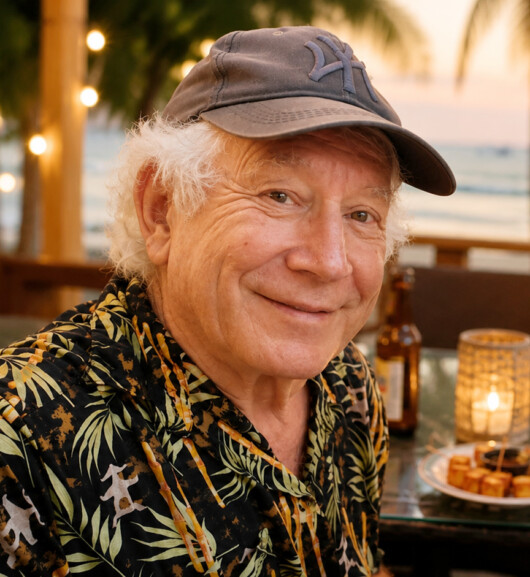
Meet the Wastewater Garden Team

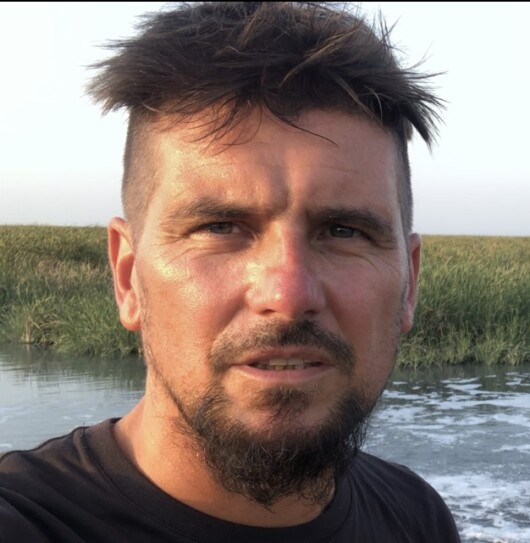
Florence Cattin
David Tocchetto
Mark Nelson
Scientific Publications on Constructed Wetlands & Wastewater Garden Systems
By Eden in Iraq Wastewater Garden Project team members
Peer-reviewed scientific papers
Nelson, M. (2020). “The challenge of managing water and nutrient cycles in a mini-world – the lessons from Biosphere 2, Global Water Forum” globalwaterforum.org/2020/08/06/the-challenge-of-managing-water-and-nutrient-cycles-in-a-mini-world-the-lessons-from-biosphere-2/. 1.
Saggaï, M., Abdelkader, A., Nelson, et al. (2017). “Long-term investigation of constructed wetland wastewater treatment and reuse: Selection of adapted plant species for metaremediation.” Journal of Environmental Management (201): 1 October 2017, pp. 120-128.
Nelson, M., and B.C. Wolverton (2011). “Plants + Soil/Wetland Microbes and Food Crop Systems that also Clean Air and Water.” Advances in Space Research (47) 4:582-590. dx.doi.org/10.1016/j.asr.2010.10.007.
De Stefani G., Tocchetto D., Salvato M. and Borin M (2011). “Performance of a floating treatment wetland for in-stream water amelioration in NE Italy”. Hydrobiologia 674 (1):157-167.
Hafouda L., M. Hadad M, Y. Arif, K. Djafri, et al (2008). “L’épuration des eaux usées domestiques par les plantes; une alternative a encouragé pour une préservation durable de l’environnement on zones arides; Cas de la station pilote du vieux Ksar de Temacine; Touggourt).” Colloque international “Aridoculture”<.em>, Biskra, Algérie, le 13 et le 14 Décembre 2008
Nelson, M, F. Cattin, M. Rajendran, et al. (2008). “Value-adding through creation of high diversity gardens and ecoscapes in subsurface flow constructed wetlands: Case studies in Algeria and Australia of constructed wetland systems.” Paper presented at the 11th International Conference on Wetland Systems for Water Pollution Control, November 2008, Indore, India. www.researchgate.net/publication/267845275_Value-adding_through_creation_of_high_diversity_gardens_and_ecoscapes_in_subsurface_flow_constructed_wetlands_Case_studies_in_Algeria_and_Australia_of_Wastewater_Gardens_R_systems.
Tocchetto D., Simonetti G., Salvato M., Borin M., 2008. “In-stream floating vegetated systems to reduce effluent loads”: Proceedings of “8th International Wetlands Conference INTECOL” (Cuiabà Brasile 20-25 Luglio 2008) p. 32.
Borin M., Tocchetto D. (2007). “A constructed surface flow wetland for treating agricultural drainage waters. Water and nitrogen balance from 1998 to 2002.” Science of the Total Environment, vol. 380, no. 1-3.
Nelson M., Cattin F., Tredwell R., et al. (2007). “Why there are no better systems than Constructed Wetlands to treat sewage water: Advantages, Issues and Challenges”, Center of New Water Technologies (CENTA), Ministry of Environment, Sevilla, Spain.
Nelson, M., H. T. Odum, M. T. Brown, M.T., et al. (2001) “Living off the land: resource efficiency of wetland wastewater treatment.” Advances in Space Research vol. 27(9): 1546-1556.
Nelson, M., M. Finn, M., Wilson, et al. (1999). “Bioregenerative recycle of wastewater in Biosphere 2 using a created wetland: two year results.” Ecological Engineering 13: 189-197.
Nelson, M., (1998). “Wetland systems for bioregenerative reclamation of wastewater — from closed systems to developing countries.” Life Support and Biosphere Science, 5(3): 357-369.
Chapters in Books / Scientific Conference Publications
Nelson, M., Cattin, F., Tocchetto, D. and L. Hafouda (2021). “Constructed Wetlands in Hot and Arid regions: Wastewater Gardens systems in Yucatan, Mexico; northwest Australia; northern Algeria and southern Iraq.” Constructed Wetlands in Hot and Arid Regions, Springer Publishers.
Tocchetto D, Rubenstein M, Nelson, M, Al Asadi J (in press, 2021). “Circular economy in the Mesopotamian Marshes: The Eden in Iraq Wastewater Garden Project.” Circular Economy and Sustainability: Environmental Engineering, Policy, and Management, Vol. II. Elsevier Publishing, Amsterdam, The Netherlands.
Davide Tocchetto, Meridel Rubenstein, Mark Nelson, Peer Sathikh, Florence Cattin ,The Marshes of Southern Iraq: New Eden in Iraq treatment wetlands project, p. 149, CHAPTER 5 – WETLAND MANAGEMENT, in Ecology, Functioning and Management, edited by Maurizio Borin, Mario Malagoli, Michel Salvato, and Benek Tanis, Published by P.A.N. s.r.l.,Via della Croce Rossa, 112 – 35129 Padova (Italy),ISBN 978-88-902948-4-6, 2020
De Stefani G., D. Tocchetto, M. Salvato, et al. (2009). “Applications of floating system for in stream water treatment.” Proceedings of 4th Annual Meeting of the European Chapter of the Society of Wetlands Scientists (SWS), pp. 140-141.
Tocchetto D, Rubenstein M, Nelson, et al.(2013). “Marshes of Southern Iraq: New Eden in Iraq treatment wetlands project.” Proceeding of International Conference 1-4 Sept. 2013, Society of Wetland Scientists European Chapter, Padova, Italy.
Tocchetto D. (2007). “Treatment of Wastewater with Natural Systems and Reuse of Clean Water for Different Applications in the Caribbean Islands.” Proceedings of CWWA2007 Conference 1-5 Oct 2007, Caribbean Wastewater Association Conference 2007, St. Kitts, West Indies.
Borin M., D. Tocchetto(2006). “Observations on ornamental macrophytes for their potential use in subsurface flow wetland systems.” Proceeding of IWA International Conference, Lisbon.
Nelson, M., R. Tredwell, A. Czech, et al. (2008). “Worldwide Applications of Wastewater Gardens and Ecoscaping: Decentralised Systems which Transform Sewage from Problem to Productive, Sustainable Resource.” Decentralised Water and Wastewater Systems : International Conference, Fremantle, Western Australia, 10-12 July 2006 pp. 63-73, IWA Publications, London.
Debabeche M., M. Lajo, D. Tocchetto, et al. (2010). “Eaux usées épurées par phytoepuration pour l’irrigation des espaces verts urbains dans un climat aride.” Proceedings of 5th International Conférence Water Resources in Mediterranean Basin “WATMED5” May 26-28 2010, Lille, France.
Tredwell, R. M. Nelson (2009). “Effective Approaches for Environmental Wastewater Management and Training – The Birdwood Downs Case Studies in the Kimberley Region Of West Australia.” Sustainability of Indigenous Communities in Australia, pp. 207-220, Murdoch University, Murdoch, West Australia.
Tocchetto D., M. Borin (2007). “Floating vegetated systems to reduce the effluent loads in aquaculture farms. Performance and system evolution.” Proceeding of International Conference on Multi Functions of Wetland Systems.
Books/Dissertations
Nelson, M. (1998). “Limestone mesocosm for recycling saline wastewater in coastal Yucatan, Mexico.” Ph.D. dissertation, Dept. of Environmental Engineering Sciences, University of Florida, Gainesville, pp. 329.
Mark Nelson, 2014. “The Wastewater Gardener: Preserving the Planet One Flush at a Time,” Synergetic Press, Santa Fe, NM. Awards: 2014 Living Now Book Awards, Independent Publishers Association Gold award; 2015 Ben Franklin Silver Award (Independent Book Publishers Association); Foreword Reviews’ 2014 INDIEFAB Book of the Year Silver Award, Winner for Ecology and Environment.