Timeline

1967 Theater of All Possibilities

Theater of All Possibilities (TAP) was a key part of the experimental arts and cultural movements coming out of the ‘60’s and ‘70’s, and, over decades, became a kind of think tank for imaginative futures. John Allen, Marie Harding and Kathelin Gray formed TAP in San Francisco in 1967, a time of radical experiments in social organisation. They also formed Enterprise for Developing Possibilities to implement entrepreneurial projects. The following year, their group moved to New York City while they located land to serve as a base to develop a lifestyle that combined the arts, sciences and land-based skills. In 1969, they acquired 160 acres outside of Santa Fe, New Mexico, calling it Synergia Ranch. The whole-system concept of synergetics threaded throughout their subsequent history, promoting lateral thinking and active interdisciplinary feedback.  TAP held summer festivals and annual international tours, performing adaptations of classics and new, devised pieces. Green enterprises and sustainable land policies developed alongside rehearsals and performances. In the
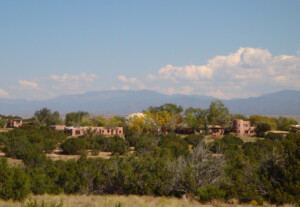
1969 Synergia Ranch

Synergia Ranch I.E. began its ecological work, in 1969 on its first ‘challenge,’ a badly eroded 60-hectare ranch near Santa Fe, New Mexico. Synergy was a goal: creating systems where cooperating elements produce something which is greater than, and unpredicted by, the sum of the parts. So, the property was optimistically named Synergia Ranch. The group’s move to New Mexico coincided with the start of the modern environmental movement
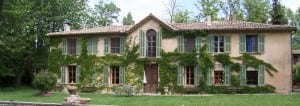
1975 Les Marroniers

Les Marroniers, Aix-en-Provence France In 1975, we acquired the Les Marronniers property to serve as the ecotechnic Mediterranean biome project and I.E. conference center. The Heraclitus arrived in Marseille harbor in 1976 and the ship crew helped with restoration of the main 18th century farmer’s large house then subdivided into small apartments. Main house and front pond at Les Marronniers, Aix-en-Provence (photo Rio Hahn).   Les Marronniers is located 5 km north of Aix-En-Provence, France. Les Marronniers was architected in an integrated ecological system incorporating the elements of farming, grazing, woodlands, orchards, artisan atelier and residence. The Louis Quatorze maison and attendant buildings house up to thirty persons and provided versatile facilities for workshop, conferences, dance and theater. The 7 hectare (17 acre) property was a beautiful example of the richness of the traditional small mixed farms of the region. It had a woodland area, fields for row crops like corn or wheat, animal yards, fruit orchard and vegetable gardens.

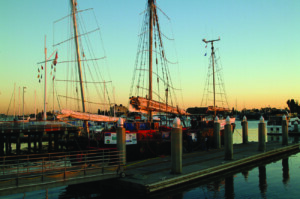
Heraclitus image at Sunset

1975 RV Heraclitus

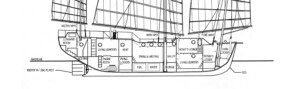
    1975 RV Heraclitus ‘There is a fire burning over the Earth, taking with it ancient cultures, visionary wisdom,plants, animals, languages, all the best of our human nature. Quelling that flame,reinventing the poetics of diversity, is the greatest challenge of the next era. TheHERACLITUS is a symbol of that hope. A moving platform of poets, artists, scientistsexemplifying, by their own sincerity and intent, our own human quest, celebrating everything that we are.’ Wade Davis, Explorer In Residence, National Geographic Society, Onboard Heraclitus Amazon Expedition 1981 After the founding of the Institute of Ecotechnics in 1973, the idea emerged that to accelerate the development of this new discipline harmonizing technologies and ecology, the Institute would conceive of cutting-edge demonstration projects and then consult to them in different biomes around the world. This would increase our understanding since each biome and project would face unique challenges both ecologically and culturally. The Sufis have a saying: “See something that needs doing and

1976 Quanbun Downs & Birdwood Downs

1976 Quanbun Downs & Birdwood Downs   The vision we had when we started the Institute of Ecotechnics was of starting bold demonstration hands-on ventures in key biomes around our planet. It was clear mainstream economics was consuming everything it could, relentlessly and without remorse. Unfettered capitalism was winning – and ecosystems, human cultures and the biosphere – were losing. There had to be better ways to meet human needs AND sustain, restore and regenerate the world of nature. That was our optimistic starting point. What brought IE to northwest West Australia was the challenge of working in another major biome facing grave threats: tropical savannah. The Institute started a series of annual international conferences focused on major Earth biomes in 1976 and we heard from participants that the Kimberley had been identified as a critical savannah region which faced severe desertification. Savannahs are a major ecological biome: grassland with varying tree cover, found in tropical regions worldwide. When the
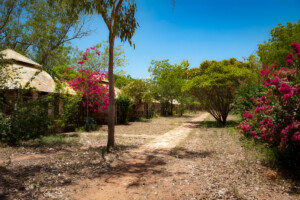
1978 Birdwood Downs, Australia

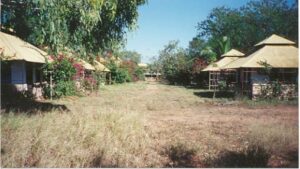
Birdwood Downs 1978-2022, Derby, West Australia tropical savannah project The Institute helped conceive and consult on a working demonstration project for semi-arid tropical savannahs near Derby, in the remote Kimberley region of northern Western Australia, from 1978 to 2022, when the property was sold. The 5000-acre (2000-hectare) property, Birdwood Downs, is located in Kimberley’s coastal ecosystem. Due to the region’s severe environmental conditions and a history of poor pastoral practices, overgrazing with sheep and then cattle, coupled with the overuse of fire leading to overburning, has led to widespread desertification, land degradation, and marginal economics. View of dense regrowth of Acacia (wattle) Wattle chopping to control invasive species Since the Institute started its ecological consulting in 1978, Birdwood Downs has been actively engaged in developing holistic methods of improving degraded lands using stock management, controlling invasive woody weeds, and land regeneration; developing sustainable economics, and environmentally friendly architecture, wastewater management and recycle, using Wastewater Gardens and Ecoscaping. Birdwood Downs also
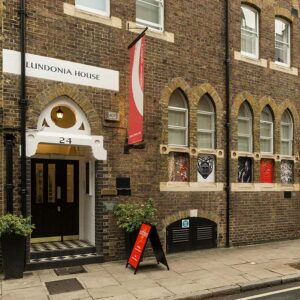
1979 October Gallery

October Gallery in London, United Kingdom. After extensive repairs to the semi-derelict Victorian school building in Bloomsbury, the October Gallery opened in 1979. The Gallery’s mission was to showcase ground-breaking global art and culture and the critical megalopolitan environment. As the U.K. arm of the Institute of Ecotechnics, the Gallery also offered an ideal location for bringing together artists and scientists and became an important venue for organizing I.E. conferences.
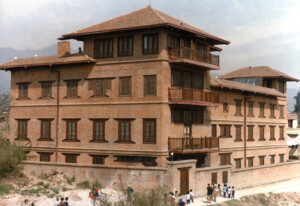
1980 Hotel Vajra

Hotel Vajra in Kathmandu, Nepal In 1980, I.E. worked with a community of Tibetan refugees to design and construct the Hotel Vajra in Kathmandu, Nepal. The earthquake-proof building (which survived the 7.8 magnitude 2015 event) includes theatre and library spaces which play host to a variety of cultural events featuring traditional and contemporary artists, actors, and musicians of Nepal, Tibet, India and everywhere else beyond.

1983 Caravan of Dreams

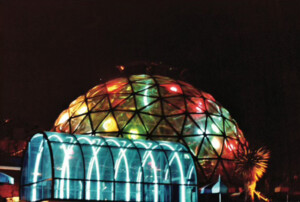
Caravan of Dreams In 1983, I.E. members and T.A.P. actors helped construct and manage the Caravan of Dreams arts complex in downtown Fort Worth, Texas. This venture achieved its goal of revitalising a run-down and residentially depopulated city centre by creating a forum for the arts (dance, theatre and music), as well as offering an attractive ambience to eat and enjoy the nightlife with its rooftop bar and geodesic dome cacti/succulent display. Ornette Coleman, a Ft. Worth native who was a close friend of the Institute, opened the Caravan’s jazz nightclub with a week of performances.
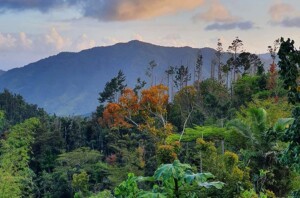
1983 Las Casas de la Selva

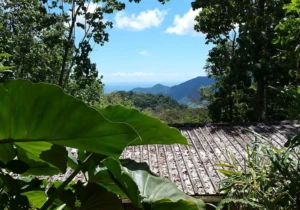
Las Casas de la Selva in Puerto Rico Las Casas de la Selva: Four Decades of Rainforest Restoration, Sustainable Forestry, and Ecological Innovation In 1983, the Institute of Ecotechnics launched its final major field project, Las Casas de la Selva, in the mountains of southeastern Puerto Rico near the municipality of Patillas. What began as an ambitious experiment in sustainable rainforest management has evolved into one of the Caribbean’s longest-running demonstrations of ecological restoration, sustainable forestry, conservation research, and environmental education. The origins of the project can be traced to a broader question that emerged from the Institute’s earlier work around the world: how can people meet their material needs while maintaining healthy ecosystems? Members of the Institute of Ecotechnics had spent years working in diverse environments, including deserts, oceans, urban systems, and agricultural landscapes, and were the original pioneers of Biosphere 2.  In an expedition aboard the Research Vessel Heraclitus through the Amazon, the crew witnessed firsthand the rapid
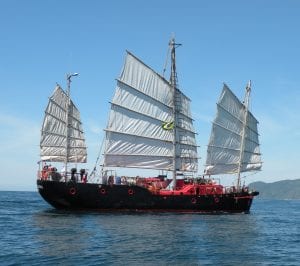
1983 RV Heraclitus Around the Tropic World Expedition

The Around the Tropic World Expedition (1983–1986) Between February 1983 and June 1986, the Institute of Ecotechnics’ research vessel Heraclitus completed its first circumnavigation of the globe—a 40-month expedition that sailed westward from San Juan, Puerto Rico, and returned to the same port after traversing more than 30,000 nautical miles through the tropical regions of the world. Calling at twenty-five ports across the Pacific, Indian Ocean, Red Sea, Mediterranean, and Atlantic, the expedition carried a rotating crew of seven to nineteen people, with more than one hundred participants representing over a dozen nations joining at various stages of the voyage. The expedition was conceived as both a scientific and cultural investigation. Its objectives were to document traditional societies living within tropical environments, study biological and agricultural systems that had sustained human communities for centuries, and gather ecological data relevant to the emerging Biosphere 2 Project. The voyage became one of the earliest Institute of Ecotechnics expeditions to explicitly combine ethnographic
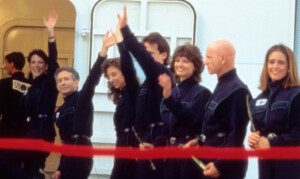
1984 Initiate the Biosphere 2 Project

1984 Biosphere 2 Project In 1984, I.E. helped initiate the Biosphere 2 project in Oracle, Arizona, a daunting experiment and ecotechnic test-bed invented by John Allen, one of the founders of I.E. Could its extensive engineering and advanced technology systems really support, and not pollute, a sealed-off mini-world? This project would lead to the creation of the world’s first laboratory for global ecology. After a search, a project site was chosen in the foothills of the Santa Catalina Mountains 20 miles north of Tucson, near the town of Oracle, Arizona. The property had been previously owned by the Countess of Suffolk, Motorola Corporation, and the University of Arizona, so it already contained a number of buildings suitable for project staff residences, offices, and conferences. Mark Nelson and I.E. started by organizing a December 1984 workshop to explore the feasibility of constructing a virtually materially closed but energetically and informationally open facility that would house mini-biomes modeled after Earth’s natural regions,
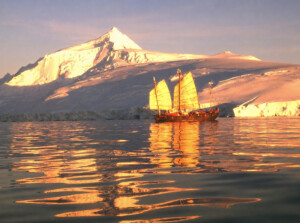
1986 RV Heraclitus Voyage to Antarctica

Voyage to Antarctica (1986–1989) During the Expedition to Circumnavigate South America (ECSA), the Heraclitus crossed the Drake Passage and spent roughly six weeks working off the Antarctic Peninsula. There the young fifteen-person crew carried out population-genetics sampling and photo-identification of Southern humpback whales and made under-ice dives before witnessing the fragility of the region firsthand in the wake of a major Antarctic oil-spill disaster. Achievements Completed one of the rare small-vessel sailing expeditions to the Antarctic Peninsula, navigating the Chilean inland waterways and crossing the Drake Passage from Cape Horn. Conducted population studies of the Southern humpback whale—obtaining skin-biopsy samples with crossbow-fired darts (a minimally invasive technique) and photo-identifying and documenting individual whales—for genetic analysis by Dr. Stephen O’Brien of the U.S. National Cancer Institute, in connection with the International Whaling Commission. Recorded the songs of humpback whales earlier in the voyage, in Ecuadorian waters near the Islas de los Muertos, while heading south along the Pacific coast. The crew
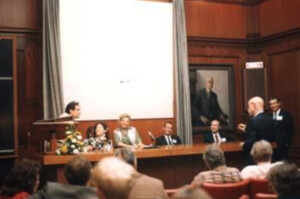
1987 – 1989 First International Biospherics Workshop

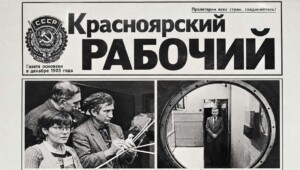
First International Biospherics Workshop IE organizes the First International Workshop on Biospherics and Closed Ecological Systems at the Royal Society in London. The second meeting was held in Moscow and Krasnoyarsk, Siberia in 1989 in collaboration with the Institute of Biomedical Problems, Moscow and the Siberian Institute of Biophysics. The third was hosted at the Biosphere 2 project in Arizona in 1992.

1987 The First Successful Release of Captive Dolphins to the Wild

The First Successful Release of Captive Dolphins to the Wild In 1987, the research vessel Heraclitus participated in a landmark achievement in marine conservation: the first successful, fully documented reintroduction of long-term captive dolphins back into the wild. Working under contract to the Oceanic Research and Communication Alliance (ORCA) and operated at the time by Ocean Expeditions Inc., Heraclitus provided logistical, scientific, and field support for a pioneering rehabilitation and release program involving two Atlantic bottlenose dolphins (Tursiops truncatus), Joe and Rosie. The project brought together an unusual coalition of marine biologists, cetacean researchers, conservationists, veterinarians, trainers, and government agencies. It represented the first time a release of previously captive dolphins had been undertaken through a carefully designed program of behavioral rehabilitation, environmental re-acclimatization, and post-release monitoring, with the approval and cooperation of state and federal authorities. Contemporary reports note that the permit issued for Joe and Rosie was the first federal permit specifically authorizing the preparation of captive dolphins
1991 – 2001 RV Heraclitus Expeditions

RV Heraclitus Expeditions Coral Reef Expeditions (1991–2006) For approximately fifteen years, coral reefs became the principal focus of the research vessel Heraclitus. Operating first under the Planetary Coral Reef Foundation (PCRF) and later the Biosphere Foundation, The ship served as a versatile base for coral-reef studies around the world, working with researchers of the Planetary Coral Reef Foundation (PCRF) and scientists from institutions including Scripps Institution of Oceanography, Columbia University, MIT, and Boston University at more than 40 sites across the Red Sea, Indian Ocean, and Pacific. RV Heraclitus supported one of the earliest large-scale efforts to document coral-reef conditions on a planetary basis. Beginning with the collection of living reef organisms for the ocean biome of Biosphere 2, the program evolved into a global network of reef-monitoring stations spanning more than forty sites throughout the world’s tropical oceans. Research included reef ecology, coral health assessment, mangrove studies, reef mapping, satellite-based monitoring, biodiversity documentation, and paleoclimate investigations using coral-core archives.
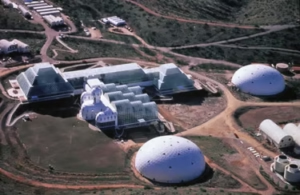
1991 -1994 Biosphere 2

Biosphere 2 Biosphere 2’s first two closed ecological system experiments, the first for 2 years from September 1991-September 1993, followed by seven months of research, and a second crew March 1994-September 1994.
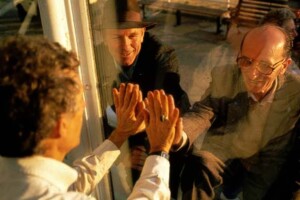
1994 October Gallery Workshops

At the October Gallery, from small, hopeful beginnings in 1994, the embryonic schools’ workshops initiative has grown exponentially and now touches the lives of many – annually delivering Gallery workshops to over two thousand participants from nursery, primary, secondary, SEN and special schools.
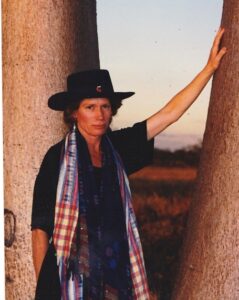
1995 Robyn Tredwell Honored as Woman of the Year

Robyn Tredwell Honored as Woman of the Year Robyn Treadwell, Birdwood Downs’ general manager from 1984-2012. In 1995, Robyn Tredwell was selected as the national winner of the prestigious ABC Rural Woman of the Year Award, chosen from 41 state finalists and more than 350 entrants across Australia. The award recognized her pioneering work at Birdwood Downs Station in the Kimberley, where she helped develop innovative approaches to sustainable land management, environmental education, and community engagement in Australia’s tropical savannah landscapes. For Robyn, the recognition was never about personal achievement alone. She viewed the award as an opportunity to encourage new ideas in rural Australia and to demonstrate that ecological stewardship, community development, and economic sustainability could work hand in hand. Characteristically modest, she hoped that others working in rural and remote regions might find inspiration in the projects and experiments underway at Birdwood Downs. The award reflected only one chapter of an extraordinary life. Before arriving in the Kimberley,
1997 Waste Water Garden Project in Mexico

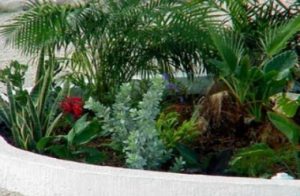
Waste Water Garden Project in Akumal Mexico The first two Wastewater Gardens were created in Akumal, Mexico in cooperation with I.E., the Biosphere Foundation, and the Center for Wetlands, University of Florida to protect nearby coral reefs from sewage pollution and create beautiful biodiverse gardens with the treated water. These systems were studied by Mark Nelson as part of his PhD in Environmental Engineering Sciences. Over 30 systems were later created in the Yucatan

2000 -2008 The Laboratory Biosphere

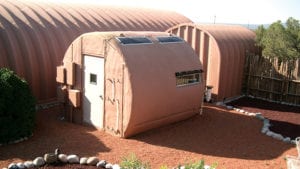
The Laboratory Biosphere The Laboratory Biosphere facility was constructed and researched at Synergia Ranch, Santa Fe, NM. It housed a growing area under artificial lights coupled with an expansion/contraction chamber and studied food crops and their interactions with the soil, water and atmosphere of the closed ecological system.
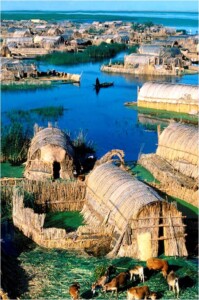
2002 Wastewater Gardens in Bali

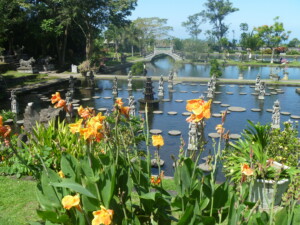
Wastewater Gardens in Bali Wastewater Gardens begins working in Bali, Indonesia in alliance with IDEP (Indonesian Foundation for Education in Permaculture), many systems are installed in Bali, Sulawesi and other islands. Also with funding from the Department of Aboriginal Housing, West Australia the first Wastewater Gardens on Aboriginal communities.

2004 The first Wastewater Garden in Puerto Rico

The first Wastewater Garden in Puerto Rico, 2004   Wastewater Garden at Las Casas de la Selva, Patillas In 2004, Las Casas de la Selva became home to one of Puerto Rico’s first Wastewater Gardens® (WWG), constructed with support from the Puerto Rico Department of Natural and Environmental Resources. The project was developed as a demonstration of ecological wastewater treatment within a tropical rainforest setting, reflecting Las Casas’ commitment to integrating sustainable technologies with environmental stewardship. Located within the mountains of southeastern Puerto Rico, Las Casas encompasses approximately 1,000 acres of forested land drained by numerous streams that flow into the Río Grande de Patillas watershed and ultimately to Lake Patillas, an important source of drinking water and irrigation for surrounding communities. Protecting water quality has therefore always been a priority. The Wastewater Garden was designed to naturally treat wastewater from the project’s main homestead while preventing contamination of nearby streams, groundwater, and downstream water supplies. Construction presented significant challenges.
2006 Wastewater Gardens International in Algeria

Wastewater Gardens International in Algeria Wastewater Gardens International pioneered the first Wastewater Garden in Algeria, for a restored historic caravanserai city in Temacine. At the suggestion of well-known Algerian artist, Rachid Koraichi, the system took the shape of a crescent moon. Wastewater Gardens International in cooperation with the Institute of Ecotechnics pioneered by bringing the first Wastewater Garden to Algeria, for a restored historic caravanserai city in Temacine. At the suggestion of well-known Algerian artist, Rachid Koraichi, the system took the shape of a crescent moon, an important symbol culturally. The Institute of Ecotechnics had been invited in 2006 to submit a tender to the Department of Sanitation and Environmental Protection (Ministère des Ressources en Eau / Direction de l’Assainissement et de la Protection de l’Environnement – MRE/DAPE), with co-funding from the municipality of Temacine and the Belgian Technical Cooperation – ADB/CTB, to develop new integrated water resources management practices; included in the delivery of the constructed wetland treatment plant
2011 Eden in Iraq Wastewater Garden Project

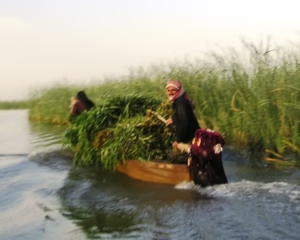
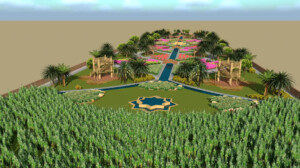
Eden in Iraq Wastewater Garden Project 2011 Eden in Iraq Wastewater Garden Project Launch of the Eden in Iraq Wastewater Garden project for 8,000-10,000 Marsh Arabs in elChibaish, Iraq in the marshlands of southern Iraq. The project is a collaboration between Nature Iraq, Wastewater Gardens International and the Institute of Ecotechnics which also serves as fiscal sponsor. Meridel Rubenstein, an artist then teaching at the Nanyang Technological University in Singapore, project director, enlisted Dr. Mark Nelson and his expertise in constructed wetland to cooperate in a project symbolically restoring the Garden of Eden in an historically significant area which has seen civic war, ethnic strife, and ecological devastation. Our first trip there was in 2011 where we enlisted the support of Azzam Al-Wash and Jassim Al-Asadi of Nature Iraq, an environmental NGO working in the marshes. The marshlands of southern Iraq created by the Tigris and Euphrates Rivers are deeply historic, part of the “fertile crescent”, the birthplace of Western
2015 Puerto Rico Hardwoods

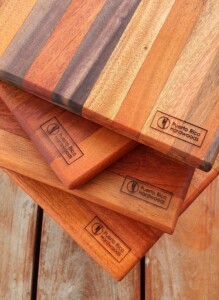
Puerto Rico Hardwoods Puerto Rico Hardwoods Building a sustainable wood economy on a small island. Puerto Rico Hardwoods (PRH) was founded in 2015 with a simple but ambitious vision: to transform Puerto Rico’s overlooked and discarded wood resources into a valuable local industry. At a time when enormous quantities of usable timber were routinely chipped, burned, buried, or sent to landfills, PRH set out to demonstrate that the island’s trees represented not a waste problem, but an economic, environmental, and cultural opportunity. Over the past decade, the company has become a leading advocate for wood recovery, sustainable utilization, and the development of a modern tropical hardwood industry rooted in local resources and ecological responsibility. The origins of Puerto Rico Hardwoods can be traced back to decades of work in sustainable forestry and ecological restoration at Las Casas de la Selva, the rainforest enrichment project established by the Institute of Ecotechnics in 1983 in the mountains of southeastern Puerto Rico. For

Contact us

Address: 1 Bluebird Court
Santa Fe, NM 87505 USA
Phone: 505.424.0237

Social Media

Newsletter

* indicates required

Institute of Ecotechnics© 2026. All Rights Reserved.