
Marine Exploration & Ocean Research
The Institute’s marine research initiatives have focused on coral reef ecosystems, ocean biodiversity, climate change impacts, sea rise, mangroves, cetaceans and marine ecology. Scientific collaborations have included coral reef mapping and health, paleo-climate research, microbial diversity studies, meteorological observations, and the collection of living corals for the ocean reef inside the Biosphere 2 project.
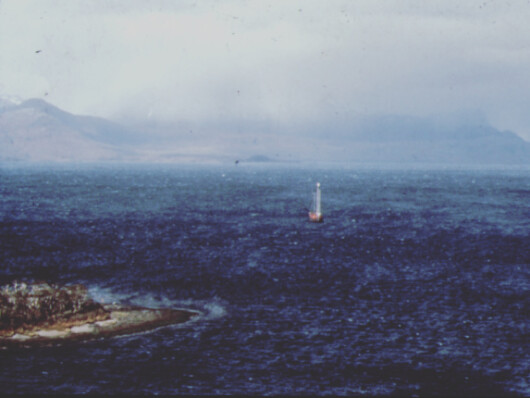
Heraclitus anchored in the Straits of Magellan in 1989
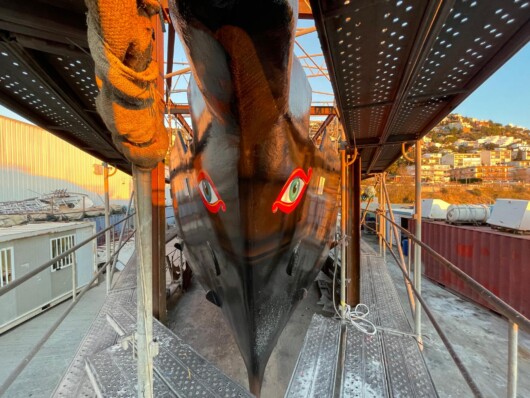
Heraclitus rebuilt in Roses in 2026
Since 1975, the Heraclitus has sailed more than 270,000 nautical miles across six oceans, exploring coral reefs, estuaries, islands, rivers, and coastal cultures throughout the Caribbean, Mediterranean, Red Sea, the Indian Ocean, Pacific and Atlantic, and the Southeast Asian Archipelagoes, Antarctica and the Amazon river.
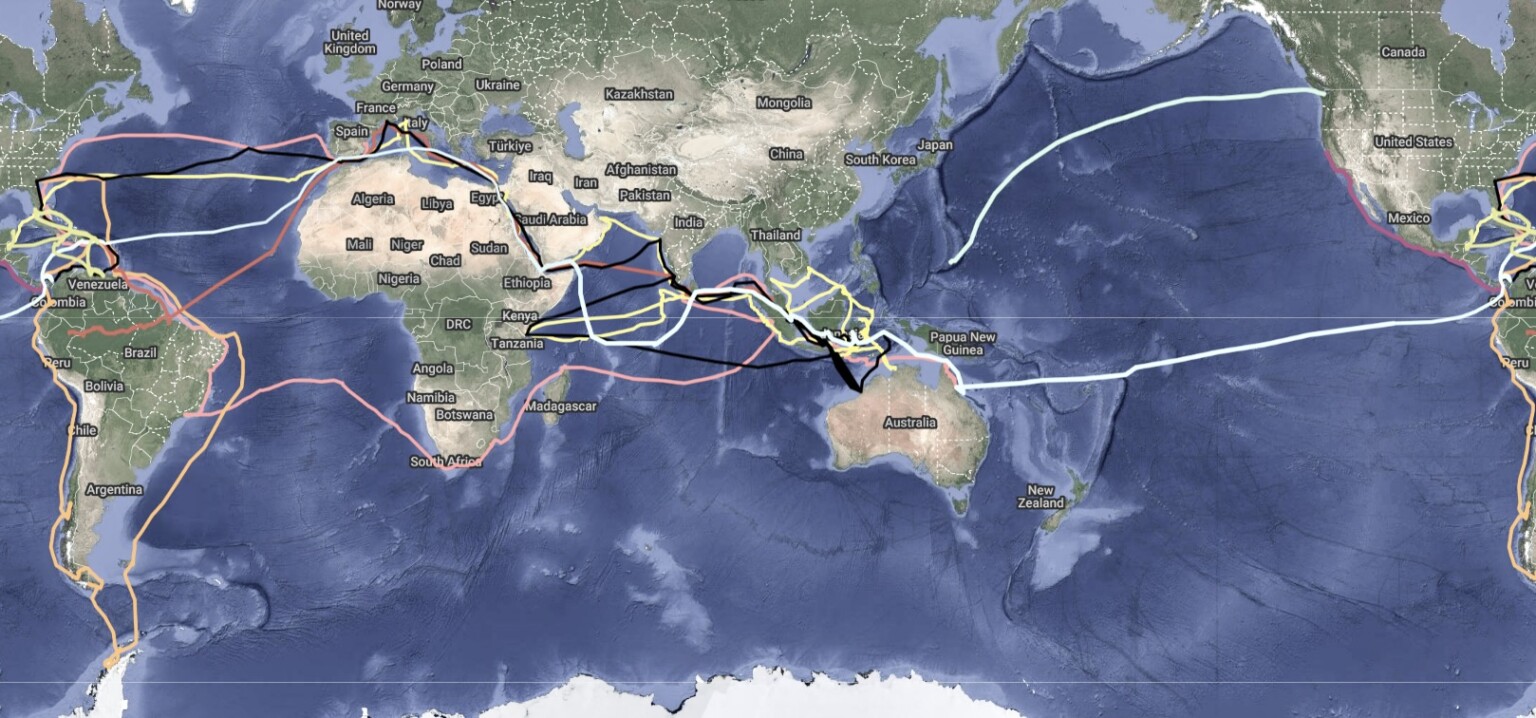
RV Heraclitus Expedition Routes
The Institute’s marine research initiatives have focused on coral reef ecosystems, ocean biodiversity, climate change impacts, sea rise, mangroves, cetaceans and marine ecology. Scientific collaborations have included coral reef mapping, microbial diversity studies, meteorological observations, and the collection of coral specimens for the Biosphere 2 project.
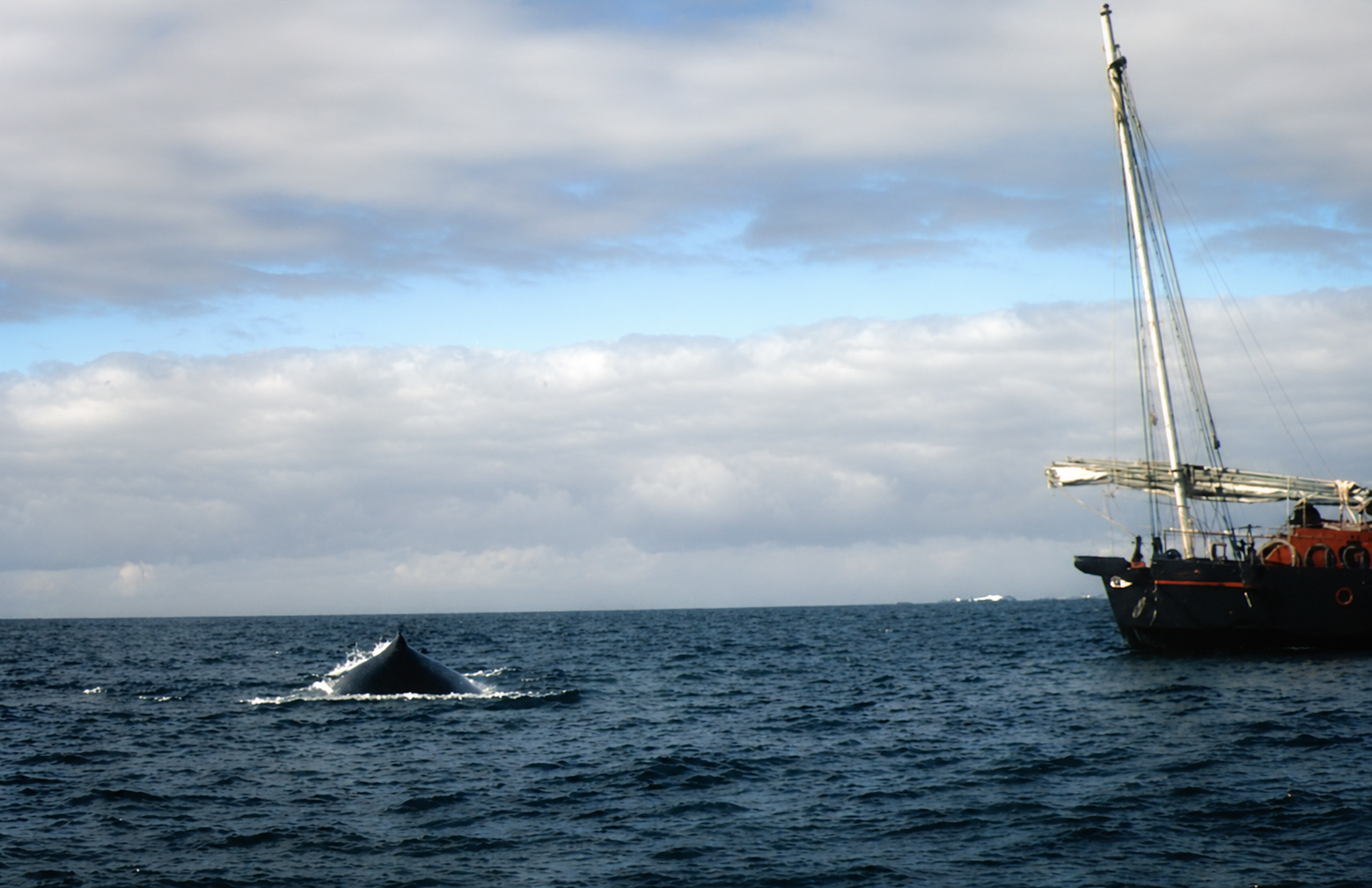
Genetic studies on whales in Antarctica examined interactions between Atlantic and Pacific Ocean populations.
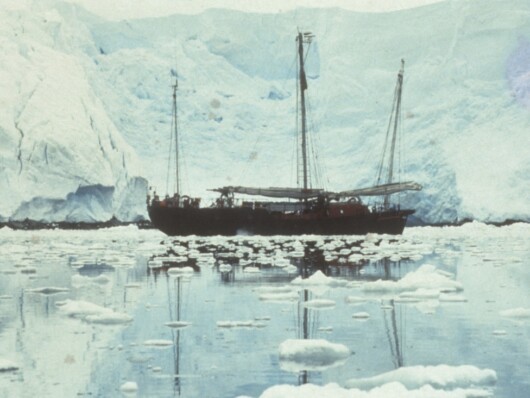
Heraclitus in Paradise Harbor, Antarctica, 1989. Heraclitus sailed to Antarctica as part of its expedition that circumnavigated South America.
In addition to marine ecology data collections, the Heraclitus has documented traditions and oral histories of coastal and maritime communities, contributing to the global effort to preserve traditional cultural and ecological knowledge (TEK) from fishermen, sailors, and sea peoples whose ways of life are rapidly changing.
The vessel has also served as an international educational platform where crew members, students, and apprentices from more than fifty countries have participated in hands-on learning in navigation, diving, ecology, teamwork, and life at sea.
Through these expeditions, the Institute of Ecotechnics continues to promote a deeper understanding of humanity’s relationship with the oceans, combining science, culture, education, and ecological awareness through direct experience and exploration.
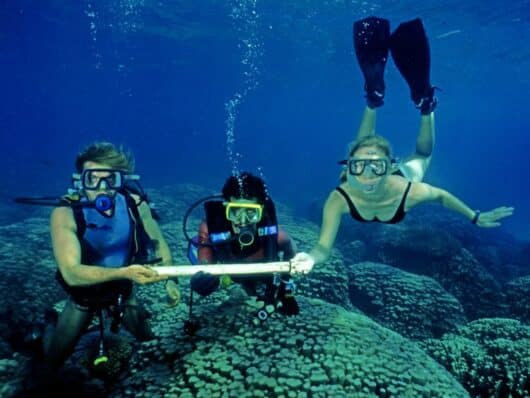
During Heraclitus coral reef expeditions, like here off the coast of Oman, cores were drilled which provide important insights into paleo-climates and climate change.
(Indian Ocean and South East Asia Coral Reef Mapping Expedition 1995 -2001)
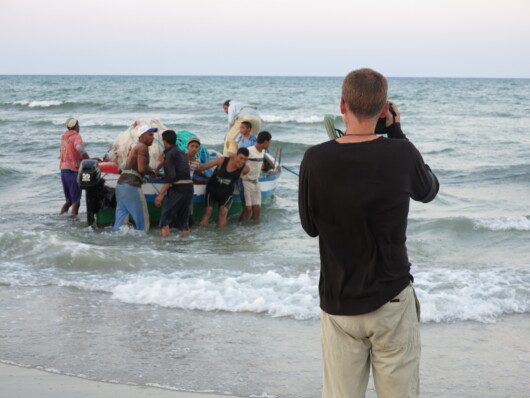
Film-maker Giles Delmas during the Mediterranean Oral History Expedition in Tunisia 2011
Selected Scientific Publications resulting from R.V. Heraclitus work:
Allen, J.P.(2003). Ethnospherics: Origin of Human Cultures, Their Subjugation by the Technosphere, The Beginning of an Ethnosphere, and Steps Needed to Complete the Ethnosphere. Ethics in Science and Environmental Politics (ESEP), l 7-24, published 30 April 2003. http://www.esep.de/articles/esep/2003/E29.pdf
Allen, J.P., Nelson, M., and Snyder, T.P., Institute of Ecotechnics, The Environmentalist, 4 (1984): 205-218.
Alling, A. (1986). Records of odontocetes in the northern Indian Ocean(1981-1982) and off the coast of Sri Lanka(1982-1984). Journal of the Bombay Natural History Society, Bombay 83(2), 376-394.
Alling, A. 1997. Pulsing Planet Earth: The Planetary Coral Reef Project. Explorers Journal. Fall, 1997.
Alling, A. and P. Dustan. 1996. Coral Reef Ecosystem of Biosphere 2. 4th International Conference on Closed Ecological Systems. Linnean Society, UK.
Alling, A., Dorsey, E. M., & Gordon, J. C. D. (1991). Blue whales (Balaenoptera musculus) off the northeast coast of Sri Lanka: distribution, feeding and individual identification. UNEP Marine Mammal Technical Report, 3, 247-258.
Alling, A., Doherty, O., Logan, H., Feldman, L., & Dustan, P. (2007). Catastrophic coral mortality in the remote central Pacific Ocean: Kiribati, Phoenix islands. Atoll Research Bulletin, 551, 1-19.
Baker, C. S., Perry, A., Bannister, J. L., Weinrich, M. T., Abernethy, R. B., Calambokidis, J., … & Vasquez, O. (1993). Abundant mitochondrial DNA variation and world-wide population structure in humpback whales. Proceedings of the National Academy of Sciences, 90(17), 8239-8243.
Charles, C. D., Hunter, D. E., & Fairbanks, R. G. (1997). Interaction between the ENSO and the Asian monsoon in a coral record of tropical climate. Science, 277(5328), 925-928.
Dustan, P., S. Chakrabarti, and A. Alling. 2000. Mapping and Monitoring the Health and Vitality of Coral Reefs from Satellite: A Biospheric Approach. Life Support and Biosphere Science, Vol 7: 149-159.
Finn, M. 1996. Comparison of mangrove forest structure and function in a mesocosm and Florida. Ph.D. dissertation, Georgetown University, Washington D.C.
Finn, M., Kangas, P., & Adey, W. (1999). Mangrove ecosystem development in Biosphere 2. Ecological Engineering, 13(1), 173-178.
Goeke, R. F. (2004, November). The Coral Reef Satellite Mission. In Remote Sensing (pp. 107-115). International Society for Optics and Photonics.
Hahn, R. 1997. R/V Heraclitus: Ship of Discovery, The Explorers Journal, Fall 1997, vol. 75, number 3
Harris, W.C. and L. J. Graumlich, “Biosphere 2: sustainable research for a sustainable planet”, http://www.columbia.edu/cu/21stC/issue-4.1/harris.html
Ippers, Linda. Environmentally Influenced Structural, Morphological and Biological Interactions on a Coral Reef in Milne Bay Province, Papua New Guinea. Master’s thesis in Environmental Engineering at Bingen University, Germany.
Langdon, C., T. Takahashi, C. Sweeney, D. Chipman, J. Goddard, F. Marubini, H. Aceves, H. Barnett, and M.J. Atkinson. 2000. Effect of calcium carbonate saturation state on the calcification rate of an experimental coral reef. Global Biogeochemical Cycles 14(2):639–654.
Langdon, C., W.S. Broecker, D.E. Hammond, E. Glenn, K. Fitzsimmons, S.G. Nelson, T.H. Peng, I. Hajdas, and G. Bonani. 2003. Effect of elevated CO2 on the community metabolism of an experimental coral reef. Global Biogeochemical Cycles 17(1):1011, doi:1010.1029/2002GB001941.
McKenna, Dennis, 1984. Monoamine oxidase inhibitors in Amazonian hallucinogenic plants: ethnobotanical, phytochemical, and pharmacological investigations, Ph.D. Dissertation, University of British Columbia (Canada).
Odum, H.T., Brown, M.T., and A. Alling, Living off the land: resource efficiency of wetland wastewater treatment, invited paper presented at COSPAR conference, Warsaw, Poland, July, 2000, Advances in Space Research vol 27(9): 1546-1556, 2001.
Nelson, M., Finn, M, Wilson, C., Zabel, B., van Thillo, M., Hawes, P., and R. Fernandez, 1999. Bioregenerative recycle of wastewater in Biosphere 2 using a created wetland: two year results, J. Ecological Engineering 13: 189-197.
Obesekara, N., R. Gunaratne, R. Hahn , 1985. Report of Sightings of Marine Mammals on the South East Coast of Sri Lanka”, Session paper, 1985 International Whale Conference, UK.
Olds, K., P. Dustan, A. Alling. 2008. Eight years of coral reef data from Melanesia and Southeast Asia: Vitality, percent cover, reef cover and effects of earthquake. Poster prepared for the International Coral Reef Symposium, Florida. http://www.pcrf.org/pdf/ICRSKatie08.pdf
Raffauf, R. “Plant Screening: A Chemical Field Test Kit,” Journal of Ethnopharmacology, vol. 32/1-3, 1991.
Sagan, D. (1987). Biosphere 2: meeting ground for ecology and technology. Environmentalist, 7(4) 271-281.
Schuyler, Q., Dustan, P., & Dobson, E. (2006, June). Remote sensing of coral reef community change on a remote coral atoll: Karang Kapota, Indonesia. In Proceedings of 10th international coral reef symposium, Okinawa, Japan (Vol. 28, pp. 1763-1770).
Spoon D.M, Hogan C.J., Chapman, G.B. Ultrastructure of a primitive, multinucleate, marine, cyanobacteriophagous ameba (Euhyperamoeba biospherica, n.sp.) and its possible significance in the evolution of lower eukaryotes. Invertebrate Biology 114.3 (1995): 189-201.