Birdwood Downs 1978-2022, Derby, West Australia tropical savannah project
The Institute helped conceive and consult on a working demonstration project for semi-arid tropical savannahs near Derby, in the remote Kimberley region of northern Western Australia, from 1978 to 2022, when the property was sold. The 5000-acre (2000-hectare) property, Birdwood Downs, is located in Kimberley’s coastal ecosystem. Due to the region’s severe environmental conditions and a history of poor pastoral practices, overgrazing with sheep and then cattle, coupled with the overuse of fire leading to overburning, has led to widespread desertification, land degradation, and marginal economics.
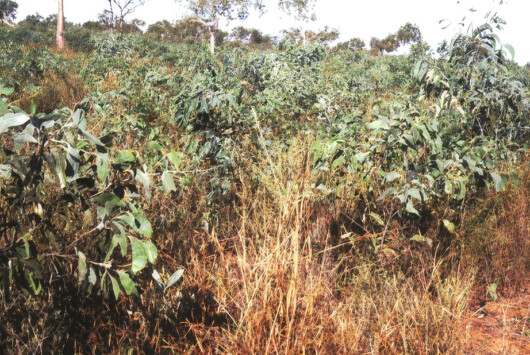
View of dense regrowth of Acacia (wattle)
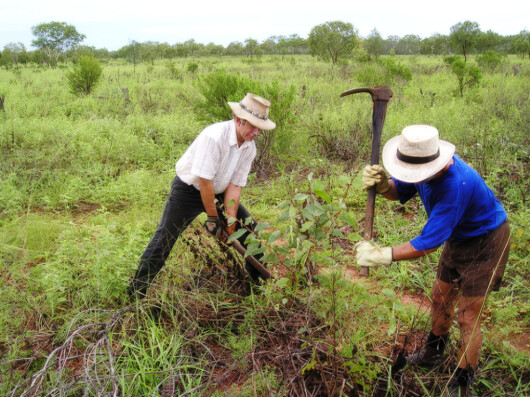
Wattle chopping to control invasive species
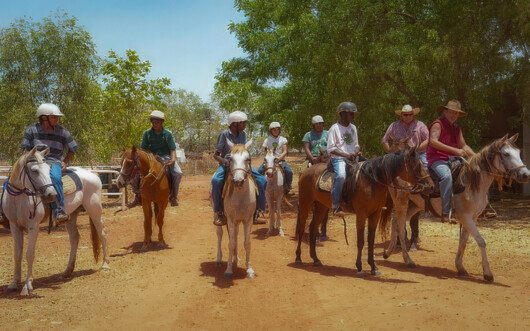
Since the Institute started its ecological consulting in 1978, Birdwood Downs has been actively engaged in developing holistic methods of improving degraded lands using stock management, controlling invasive woody weeds, and land regeneration; developing sustainable economics, and environmentally friendly architecture, wastewater management and recycle, using Wastewater Gardens and Ecoscaping. Birdwood Downs also runs hands on training, developing people’s potential from the managerial, scientific and artistic aspects, to encourage sustainability. An associated training programme open to people from diverse backgrounds is the Ecological Frontiers Programme, a nine month hands on programme in Savannah systems, combining management, science and art (theatre) trains people in a total systems approach. Birdwood Downs from time to time organizes and hosts workshops for artists. TAFE courses in rural operations and horsemanship are run at Birdwood Downs for Indigenous Australian youth, to impart the skills necessary for them to enter employment as skilled workers.
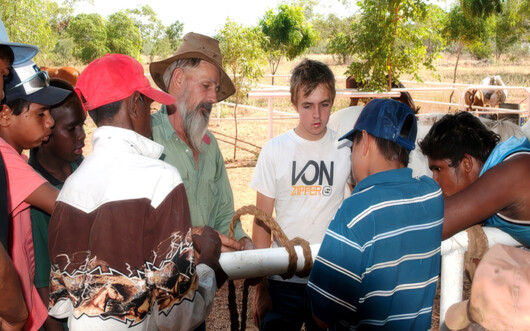
Greg Hay, Birdwood Downs station manager, with group of Indigenous Australian students.
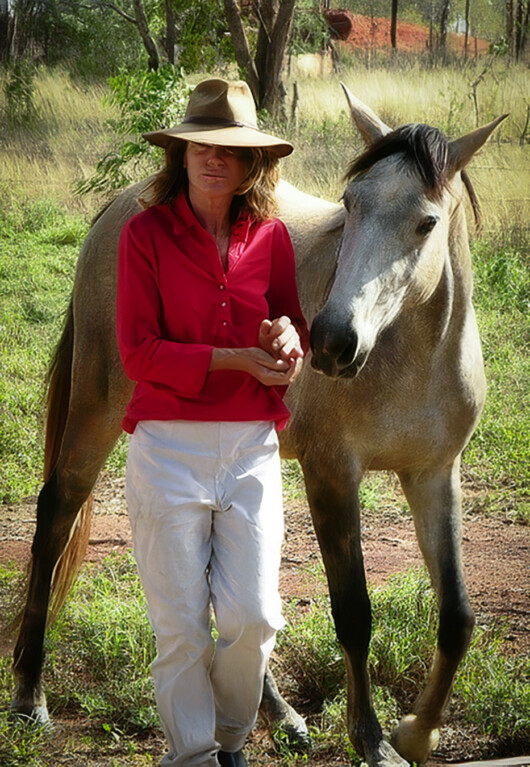
Birdwood Downs continued the horse-breeding using Quarabs (quarter horse x Arab cross) better suited to the savannah climate (credit Hans Leenaarts).
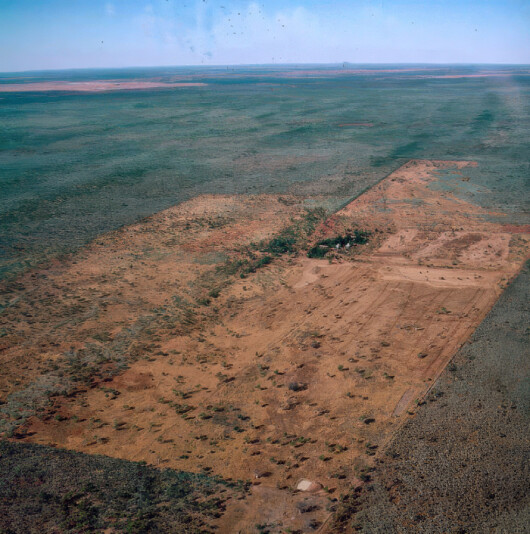
Aerial view of Birdwood Downs
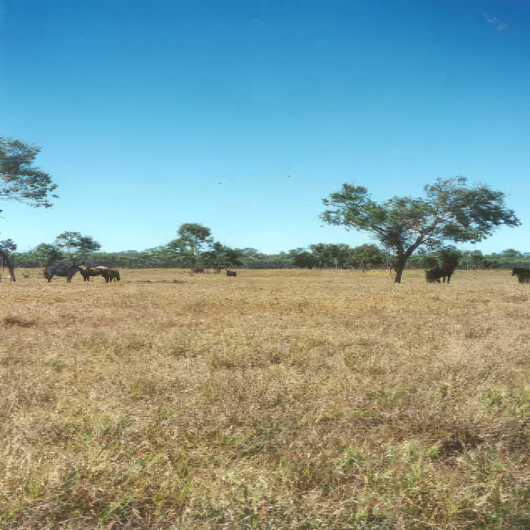
Improved pasture, Birdwood Downs.
The Kimberley’s severe environmental challenges make the projects’ results relevant to the dry tropics worldwide. Highly variable annual rainfall, including monsoonal flood and drought (annual rainfall can vary from 5″ to 50″), high winds, danger of fire during the eight to nine m o n t h ‘dry’ season, long distance from urban centers and markets, and a history of poor pastoral practices have resulted in widespread desertification, land degradation and marginal economics. These are common problems found throughout the world’s savannahs which elsewhere in the world become headline news when periodic drought on top of the previous desertification results in famine and environmental refugee migration.
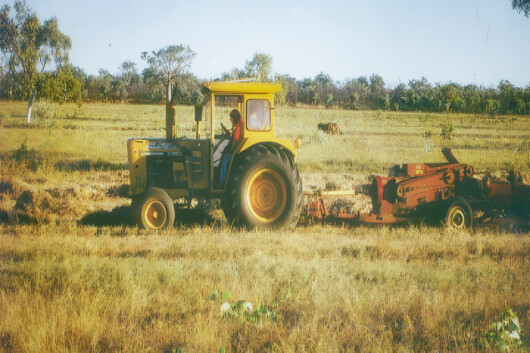
Haying the lush grasslands.
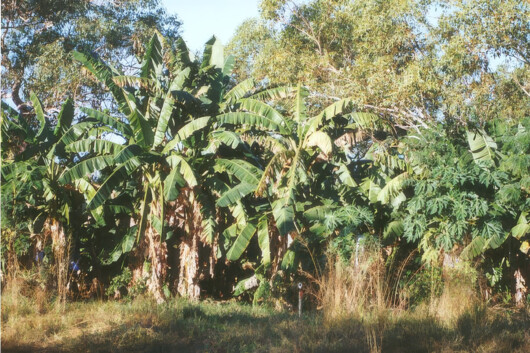
Banana and fruit tree orchard at Birdwood Downs benefit from greywater from septic tank leachdrains – a simple form of subsoil wastewater irrigation (photo Hans Leenaarts).
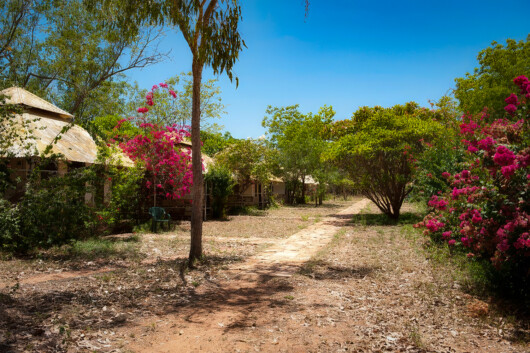
Bungalows for staff and tourists built with local rock, double-vented roofs and louvered windows for cooling; and savannah ecoscaped (credit Hans Leenaarts).
The Institute’s program for pasture regeneration used the Stylosanthes legume family from South America and the Caribbean, especially Verano and Fitzroy stylo, as they are extremely drought resistant and do well in poor soil along with Birdwood grass (Cenchrus setiger), originally from the deserts of India. The mixed pasture produces a denser plant stand minimizing erosion, fertilizer requirements are lowered and grasses thrive from the nitrogen-fixing of the legumes.
The total system approach taken by the Institute includes the complete vectoring of a community in the tropic savannahs: architecture adapted to the local climatic conditions, materials, cultures and needs; wind and solar systems; appropriate mix of animal, mechanical and modern digital communications, and cost benefit analysis.
The initial clearing and replanting of half the property, 2500 acres of degraded ‘bush’ country was completed in 1984 and the enterprise gained freehold from the West Australian Department of Lands. Experimentation in clearing techniques utilizes machine and hand methods followed by cropping programs. The old sand ridges are left covered with eucalyptus, bloodwood and other non-acacia trees; the larger trees and natural groves are also preserved in the valley pastures.
Robyn Treadwell, general manager of Birdwood Downs from 1985-2012, was honored as the Australian Rural Woman of the Year in 1995 (after being named Kimberley Rural Woman of the Year and West Australian woman of the year) in recognition of her leadership of this pioneering project in savannah ecological restoration. Photo: Robyn Treadwell with Quarab colt (credit Hans Leenaarts).
Seed produced at Birdwood Downs has gone to places ranging from Alice Springs in the Australian desert, to Saudi Arabia, West Africa and the dry sub-tropics of Texas to aid in desertification control and demonstrate the potential of the dry tropics to be sustaining if currently destructive approaches are replaced by ones based on utilizing its resources in a regenerative manner.
Birdwood Downs has been featured in academic and conference materials (e.g., Murdoch Environmental Technology Centre Conference 2006) as a model for environmental and wastewater management, sustainable economics, and Indigenous training programs reflecting recognition of its work in the sustainability field.