
Eden in Iraq Wastewater Garden Project
2011 Eden in Iraq Wastewater Garden Project
Launch of the Eden in Iraq Wastewater Garden project for 8,000-10,000 Marsh Arabs in elChibaish, Iraq in the marshlands of southern Iraq. The project is a collaboration between Nature Iraq, Wastewater Gardens International and the Institute of Ecotechnics which also serves as fiscal sponsor. Meridel Rubenstein, an artist then teaching at the Nanyang Technological University in Singapore, project director, enlisted Dr. Mark Nelson and his expertise in constructed wetland to cooperate in a project symbolically restoring the Garden of Eden in an historically significant area which has seen civic war, ethnic strife, and ecological devastation. Our first trip there was in 2011 where we enlisted the support of Azzam Al-Wash and Jassim Al-Asadi of Nature Iraq, an environmental NGO working in the marshes.
The marshlands of southern Iraq created by the Tigris and Euphrates Rivers are deeply historic, part of the “fertile crescent”, the birthplace of Western Civilization. There one of the world’s oldest cultures, the Marsh Arabs (Maidan) has flourished for at least 8,000 years, living in harmony with the marshes and their water buffalo, creating a unique and stunning architecture from their reeds.
In the early 1990s, Saddam Hussein’s forces drained the immense Southern Iraq wetlands to put down a Shi’ite uprising and the rebels hiding there. The marshes transformed into a desert, compelling hundreds of thousands Marsh Arabs to leave. Since Hussein’s demise in 2003, the Marsh Arabs have returned to re-green and restore the marshes, with the help of Nature Iraq NGO our sponsor punching holes in the diversion canals, so the marshes again receive water. Due to the rapid environmental changes in the marshes, with the return of inhabitants, serious sewage and health problems have ensued.
Where a symbiotic, sustainable relationship once existed in the marshes balanced perfectly by healthy reeds, water buffalo trade, and rice and date cultivation, the system is now unstable. The Euphrates River and the marshes have become seriously polluted, putting the Marshlands and the Marsh Arab community in peril.
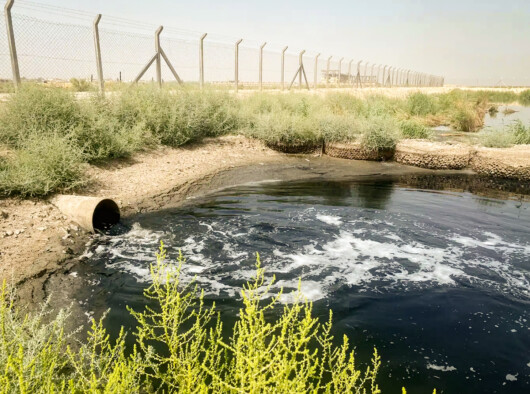
There is currently no sewage treatment in the Marsh Arab towns and cities–at most, sewage is pumped into a collection site and discharged without treatment into a river or marsh. This is causing odor and damage to the long-term ecology of the marshes and the health of the community.
The inauguration of Iraq’s first national park in 2013, the Mesopotamian Marshes National Park, demonstrates the country’s hope for environmental restoration and future tourism. In July 2016, UNESCO designated the marshes and surrounding ancient sites of Eridu, Uruk and Ur a World Heritage Site. Due to this recent designation, the traditional arts, crafts, and cultural heritage of the Marsh Arabs and the ancient Mesopotamian societies, as well as the landscape and biodiversity of the marshes, are being revived and preserved.
We plan to build the very first demonstration Wastewater Garden in El Chibaish, Southern Iraq, in order to help the Marsh Arab communities, in the process of rebuilding their war-devastated homeland, solve issues of sewage, renew environmental stability and conserve a natural environment of Outstanding Universal Value (OUV). This first demonstration garden will also be a Public Environmental Art site that honors and celebrates the rich Marsh Arab culture.
This first demonstration WWG can serve as inspiration and template for many more throughout Iraq and the Middle East which suffers from lack of sewage treatment with resulting human health crises and environmental damage. The Iraqi Minister for Water Resources who supported the construction of pre-treatment basins, called for the spread of the technology.
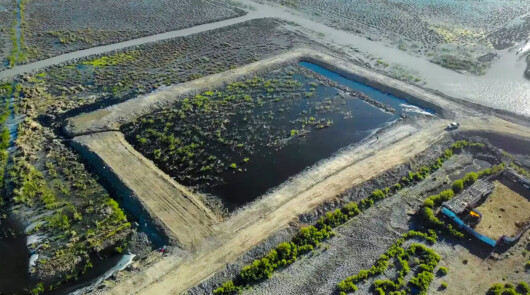
With support from the Iraqi Ministry of Water Resources in 2023 the project started construction with the first stage, primary treatment settling basins planted with marsh plants.
Support Eden in Iraq has received In April 2019, the Iraq Ministry of Water Resources committed $250,000 to build the first third of the garden beginning Spring 2020 and in March 2023 it financed the construction of pre-treatment basins.
Between 2014 and 2016, three of the largest town councils in the region enthusiastically approved of our garden by donating the use of five large sites, each serving 8000-10,000 people.-During the design and planning process throughout the past 7 years, our project has been received and approved by local, provincial, state and environmental authorities.
With the support of mayor Mr. Badeaa Al-kayoun, and regional governor of Dhi Qar, Mr. Yahya alNasiri, we chose to build our first constructed wetland and wastewater garden at El Chibaish, along the north bank of the Euphrates River, in the Central Marshes. The city is an important urban area along the main road from Nasiriyah and Basra. We hope this initial garden will serve as an important example of how this system can be implemented elsewhere within the country and throughout the Middle East where water resources are scarce and climate change threatens to deepen the crisis.
In 2013-2017, THE INITIAL RESEARCH PART OF THIS PROJECT was funded in Singapore by a ;$65,000 Ministry of Education Research Grant. In addition, the university awarded $36,500 to exhibit all aspects of the project (designs, photographs, videos, and writing) at the National Design Centre in Singapore in 2017. This comprehensive exhibition of the project and its relation to Mesopotamian history is available. In addition, Blue Tech Research LLC and several other foundations have supported the project.
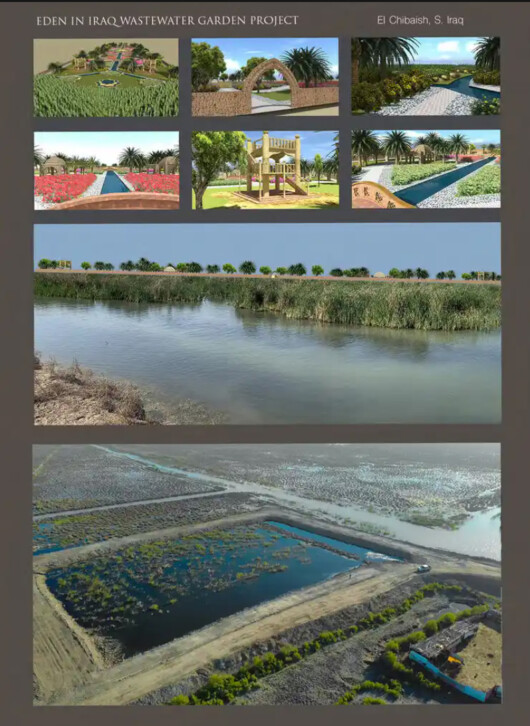
Our site in El Chibaish is 26,250 square meters (2.5 hectares/6.4 acres), which allows for treatment of the sewage wastewater of 8-10 thousand people. Currently, this wastewater is being discharged along an open canal and channeled into the marshes. It has a terrible smell and is unhealthy for all the boat traffic through the canal to the marshes.
The constructed wetland treatment will start with 7,000 square meters of reeds, which grow 1.8 meters tall. This first reed bed will immediately diminish the odor from the sewage. The wastewater will then go into the second phase of the garden: the “subsurface flow wetland.” Here, organic material of the sewage will be transformed by bacteria into mineral substances, cleaning the wastewater and simultaneously creating a beautiful and culturally significant garden by providing nutrients for plants and fruit trees. Design elements will demonstrate the rich cultural heritage of the marsh people by incorporating local materials and crafts, including earthen brick (adobe), woven reed, and ceramic tile.
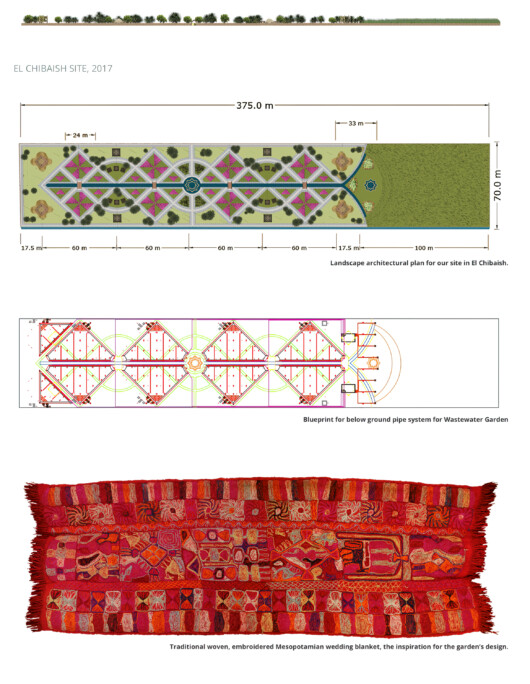
The garden will call attention to Mesopotamian design and history. Woven embroidered Mesopotamian Wedding blanket patterns have inspired the garden’s blueprint and layout of its planting areas. The designs of this ancient woven craft are inspired by “nature and its biological diversity and also the spirit of ancestors”* within Marsh Arab culture, and are being passed down to new generations. 3,000-5,000 year old Sumerian Cylinder seals will inspire graphic design elements and ceramic wall reliefs. We plan to utilize this style of ornamentation as a means of decorating the garden in collaboration with inhabitants.
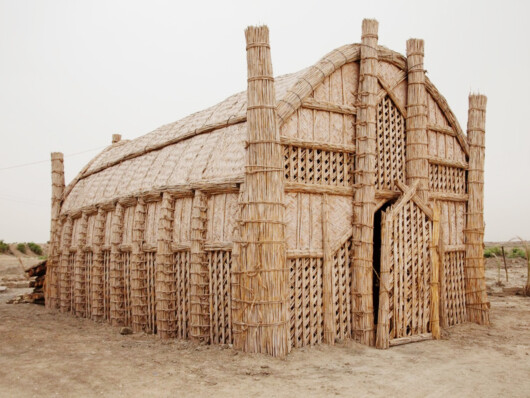
Traditional “mudhief” made entirely of reeds from the southern Iraqi marshes.
Sustainable reed architecture, in use for over 7,000 years, provides shade and respite from heat and while allowing fractal light to enter interior spaces. This easily assembled construction method will be used in the garden for shade structures and viewing towers. Earthen brick, an ancient building material well suited for the desert and prized for its thermal stability, will supplement the reed architecture. It is envisioned that small local businesses will be able use the site to sell crafts, produce, and food.
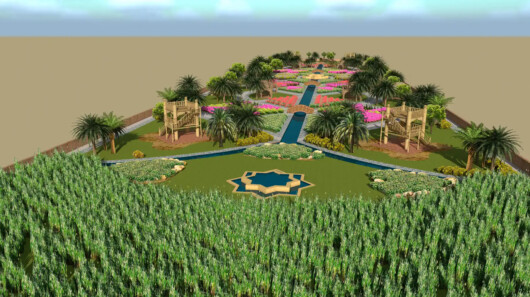
An artist’s conception of what the Eden in Iraq Wastewater Garden system will look like.
Why Iraq? Contaminated water is the leading cause of death in this region.
Over 1 million people in the area lack access to safe water.
This project is a powerful symbol of regeneration in an area which has seen civil war, cultural conflict, environmental degradation. Once the one of the largest marshlands in the world, this project is critical to reduce sewage damage to the marshes from climate change.
A square km of healthy marshland absorbs 1,500 tons of carbon per year. Eden in Iraq Wastewater Garen project is part of the marshland healing process.
The project celebrates the rich history and artistry of the Marsh Arabs with tiles, reed shade structures and other elements which pay tribute to their unique architecture and cultural creations. The project has the support of Blue Tech LLC, which consults to the water industry, as our strategic impact partner. The Eden in Iraq Wastewater Garden Project was recognized by UNESCO Global Citizens as one of the top 100 outstanding projects worldwide in 2020 The Institute of Ecotechnics. This honor was part of UNESCO’s Green Citizens Initiative, which highlights grassroots environmental projects that combine sustainability, cultural heritage, and community well-being. The project has also been featured in several museum exhibitions, including “Thirst” at the Wellcome Collection in London.
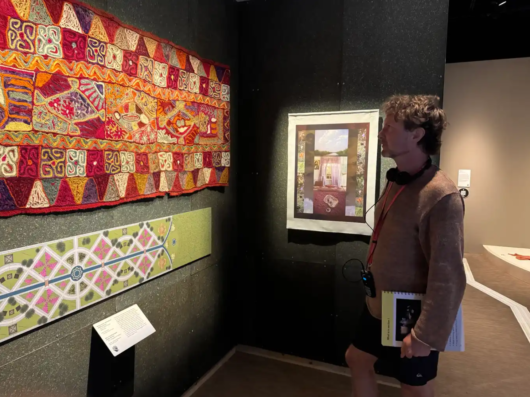
2025 Paul O’Callaghan, head of Blue Tech LLC, our impact partner, at the Welcome Center Museum exhibition: Thirst- the Search for Fresh Water, London
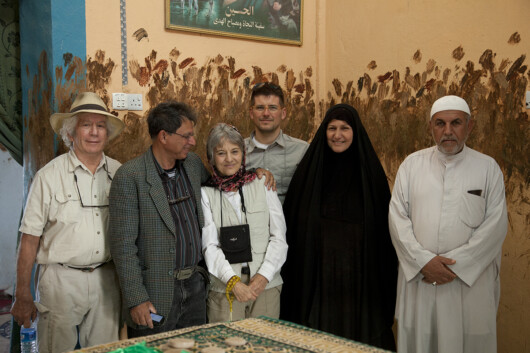
Project Team:
Director: Prof. Meridel Rubenstein, Adjunct Professor Associate, School of Art, Design, and Media, Nanyang Technological University, Singapore (2007-18).
Co-Project Director: Dr. Davide Tocchetto, Ph.D., Wastewater Gardens International, Research affiliate, University of Padua; lecturer of Agronomy. Direction of construction, wastewater system, plantings
Co-Project Director: Dr. Hydar Lafta Ali, Ph.D., head of planning for the Centre for Restoration of the Iraqi Marshlands and Wetlands (CRIMW) in the Ministry of Water Resources.
Dr. Mark Nelson, Ph.D., consultant, environmental engineer, Director, Institute of Ecotechnics (US/UK), Director, Wastewater Gardens International.
Jassim Al-Asadi, Water engineer, Managing Director, Nature Iraq (NGO)