
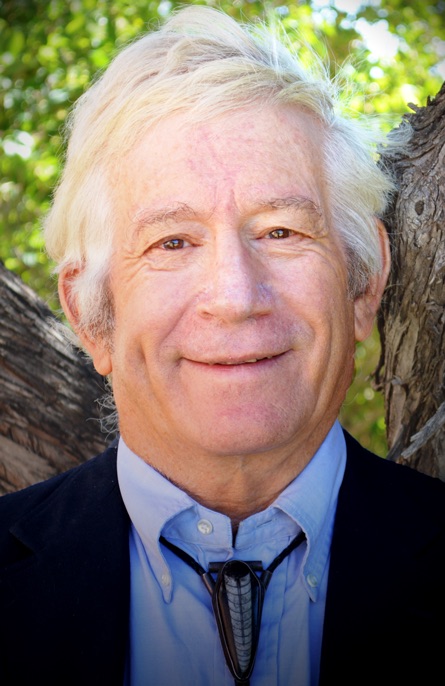
Treasurer IE USA, Chairman Emeritus of the Institute
Director, Wastewater Gardens International
Biosphere 2 crew member
Dr. Mark Nelson is a founding director of the Institute of Ecotechnics and has worked for several decades in closed ecological system research, ecological engineering, the restoration of damaged ecosystems, desert agriculture and orchardry and wastewater recycling. He is Chairman and CEO of the Institute of Ecotechnics (www.ecotechnics.edu), a U.K. and U.S. non-profit organization, which consults to several demonstration projects working in challenging biomes around the world; Vice
Chairman of Global Ecotechnics Corp. (www.globalecotechnics.com), head of Wastewater Gardens International (www.wastewatergardens.com).
Mark has helped pioneer a new ecological approach to sewage treatment, “Wastewater Gardens®” which are constructed subsurface flow wetlands with high biodiversity and has created over 90 such systems in Mexico, Belize, Bali & Sulawesi, Indonesia, West Australia, France, Spain, Portugal, Poland, the Bahamas, the Philippines, Algeria and the United States since 1996 (www.wastewatergardens.com).
He served as Director of Space and Environmental Applications for Space Biospheres Ventures, which created and operated Biosphere 2, the 3.15 acre materially closed facility near Tucson, Arizona, the world’s first laboratory for global ecology (www.biospheres.com). Dr. Nelson was a member of the eight person “biospherian” crew for the first two year closure experiment, 1991-1993. His research inside included litterfall/decomposition in the tropical biomes, population dynamics and biomass
increase, sustainable agricultural system, and constructed wetland sewage treatment system. Beginning in the 1970s, Mark worked in the high desert grassland south of Santa Fe, New Mexico where he made hundreds of tons of compost, planted over a thousand fruit and windbreak trees, creating an oasis in previously overgrazed and eroding country. Since 1978 Mark has worked in the semi-arid tropical savannah of West Australia where he helped start Savannah Systems P/L a project centered on the pasture regeneration and enrichment of a 5000 acre property in the Kimberley region. Publications include “Pushing Our Limits: Insights from Biosphere 2” (University of Arizona,
February 2018), “The Wastewater Gardener: Preserving the Planet One Flush at a Time” (Synergetic Press, 2014), co-authoring “Life Under Glass” and “Space Biospheres”, editing “Biological Life Support Technologies: Commercial Opportunities” and numerous chapters in books on space life support systems. His research papers include ones on ecological hierarchy, wastewater recycling through the use of constructed wetlands, and applications of closed ecological systems. Dr. Nelson was
a Contributing Editor of the journal, Life Support and Biosphere Science from 1993-2002, Vice Chairman of the life science sessions on Closed Ecological Systems for COSPAR (the International Committee on Space Research of the ICSU) and an Associate Editor for the journal, Advances in Space Research, 2000-2013, and is currently an Associate Editor of Life Sciences in Space Research.
Mark’s educational background includes a Ph.D. in Environmental Engineering Sciences from the University of Florida. His dissertation involved the creation of experimental Wastewater Gardens® for protection of groundwater quality and coral reef health along the coast of Yucatan, Mexico. His M.S. was in the School of Renewable Natural Resources, University of Arizona; and his B.A. in Philosophy/Pre-Med Sciences was from Dartmouth College, Hanover, New Hampshire. Mark was a summa cum laude graduate from Dartmouth, Phi Beta Kappa and is a member of Phi Kappa Phi, the honors engineering society. Mark was awarded the Yuri Gagarin Jubilee Medal, 1993 for outstanding service to international cooperation in space and the environment by the Russian Cosmonautics Federation; and elected a Fellow of the Explorers Club (1994) and a Fellow of the Royal Geographical
Society (2001).