Wastewater Gardens
The Wastewater Garden system approach arose from the experience with water treatment and reuse in Biosphere 2, a virtually air-tight mini world in Arizona. That initial constructed wetland for over two years from 1991-1993 successfully treated and recycled the wastewater from humans, domestic animals and laboratory/workshops and sent its remaining nutrients and freshwater back to the facility’s farm. Thus all nutrients and water were continually purified and recycled. The constructed wetland increased plant biodiversity, provided additional habitat and beauty and were harvested as fodder for the domestic animals.
Mark Nelson, one of the biospherian crew, managed and researched the Biosphere 2 system. He was inspired to bring this approach, which combines natural ecological process with engineering expertise, to the world. There is growing concern worldwide about human health and environmental degradation caused by sewage pollution, and the recognition of the limited resources we have of of clean, potable water.
After completing an M.S. degree in Watershed Management at the University of Arizona and a PhD in Environmental Engineering Sciences at the University of Florida, he worked with the Institute of Ecotechnics and the Biosphere Foundation, to implement the approach in a wide variety of climatic and environmental contexts. In the years since initial research and applications along the Yucatan Peninsula in Mexico, the technology has evolved and been implemented in 14 countries around the world, from cold climates like the Carpathian Mountains of Poland, to the wet tropics (e.g. Indonesia, Belize, the Philippines) and hot, arid deserts (Algeria, Iraq) and tropical savannahs (for Aboriginal and remote communities in Australia)
The high economic and ecological costs of centralized sewage treatment – pump stations, high-tech treatment plants with machinery and use of chemicals, ending with “disposal” rather than reuse of the water – is in contrast to the benefits which can be realized from intelligent design of small, decentralized and on-site treatment and reuse systems. The original concept of Wastewater Gardens – high biodiversity subsurface flow wetlands – has evolved so that total reuse of wastewater is the goal. Treated water from the constructed wetland is used for subsoil irrigation of “ecoscapes” adapted to the landscape and climate, affording more uptake of remaining nutrients and reuse of the freshwater. These ecoscapes can use native and “bushtucker” plants; or to grow shrubs and trees which can provide fruits, timber, fiber, medicinals and landscape enhancing vegetation. This is a way for the local community, the stake-holders, to shape the technology to their needs and desires.
Wastewater Gardens has become a division of the Institute of Ecotechnics as the approach exemplifies win-win scenarios, meeting human needs while safeguarding and enriching local ecosystems.
Closing the loop in our global biosphere will be more difficult than it was in Biosphere 2, but the challenge is the same – water conservation and reuse are key elements for both human and biospheric health
Wastewater Gardens - The Challenge
Conventional wastewater treatment is expensive and environmentally damaging. In many parts of the world, a lack of proper sewage systems leads to contaminated drinking water, which causes illness, poverty, and death. It also pollutes coastal areas, harming fish habitats and marine ecosystems.
Our Solution: Wastewater Gardens
The Wastewater Gardens International (WWGI) uses constructed wetlands—man-made systems that mimic natural wetlands—to treat wastewater. This method addresses global wastewater problems by cleaning water naturally and turning a waste product into a valuable resource.
Instead of expensive, high-impact sewage plants, Wastewater Gardens® systems use plants and soil to filter and recycle organic nutrients. This process returns clean water to the environment and creates new, thriving vegetation zones. This nature-based approach not only tackles pollution but also helps mitigate climate change, as these wetlands are excellent carbon and nutrient sinks.
Our Impact
WWGI has successfully implemented these systems in 14 countries: Poland, the Philippines, Spain, France, Portugal, U.S. (Puerto Rico), Mexico, Belize, Indonesia, Australia, Algeria, Iraq, New Zealand, the Bahamas. Our work proves that a more natural, cost-effective, and sustainable approach to wastewater management is possible, protecting both human health and vital ecosystems.
Project Eden in Iraq
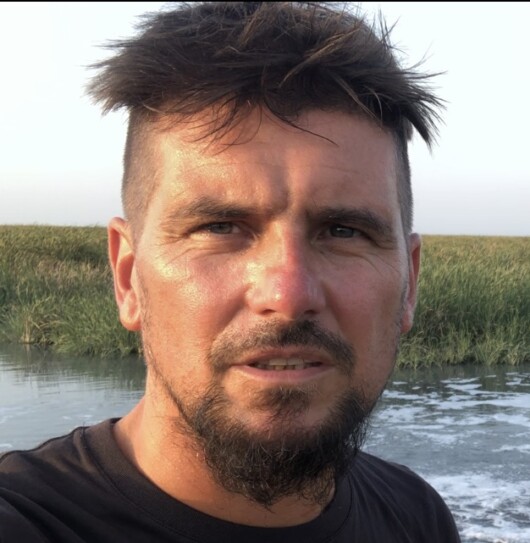
Prof. Meridel Rubenstein, Dr. Mark Nelson and Dr. Davide Tocchetto, Project co-directors
The Eden in Iraq Wastewater Garden Project, initiated in 2011, is designing and implementing a large constructed wetland to treat sewage for approximately 8,000 Marsh Arabs in El Chibaish, located in the southern Iraqi marshlands. Since its inception, the project has built strong regional partnerships, securing support from local Marsh Arab town councils, the provincial government in Nasariyah, and the national Ministries of Environment and Water Resources. Local communities, acutely aware of the impacts of untreated sewage, have shown strong interest in this low-cost, ecological treatment solution that transforms wastewater into functional, beautiful constructed wetlands. The Iraqi government views the El Chibaish pilot as a model that can be replicated nationwide to address the country’s widespread lack of effective sewage treatment infrastructure.
Project Sahara
Dr. Mark Nelson and Floroence Cattin Project co-directors
In 2004, the Institute of Ecotechnics was invited by the Tidjani family of Tamacine and renowned Algerian artist Rachid Koraïchi to explore ecological revitalization strategies for the historic Ksar of Tamacine in Algeria’s northeastern Touggourt province. This collaboration laid the groundwork for the country’s first constructed-wetland sewage treatment system. Completed by the Ministry of Water Resources between April and June 2007, the pioneering project uses natural wetland processes to treat wastewater and enables the reuse of clean, treated water—representing a major advancement for sustainable water management in the region
Meet the Wastewater Garden Team