1975 to Present - Research Vessel Heraclitus
A Floating Laboratory for Ecological, Scientific and Cultural Exploration
“There is a fire burning over the Earth, taking with it ancient cultures, visionary wisdom, plants, animals, languages, all the best of our human nature. Quelling that flame, reinventing the poetics of diversity, is the greatest challenge of the next era. The Heraclitus is a symbol of that hope. A moving platform of poets, artists, scientists exemplifying, by their own sincerity and intent, our own human quest, celebrating everything that we are.” — Wade Davis, Explorer in Residence, National Geographic Society, speaking onboard the Heraclitus during the Amazon Expedition.
The Ecotechnic Vision
Following the founding of the Institute of Ecotechnics (I.E.) in 1973, a central question emerged: how could this new discipline—harmonizing ecology, technology and culture—be developed and tested in the real world?
The Institute proposed an ambitious approach. Rather than concentrating on a single location, it would help conceive and consult to demonstration projects in radically different biomes around the world. Each project would confront distinct ecological challenges, cultural realities and economic constraints. By working across multiple environments, the Institute hoped to accelerate the development of ecotechnics as a practical discipline.
The inspiration was not to pursue easy projects or those that were already profitable. Instead, Institute members sought places where conventional approaches struggled. Ecological crises were often intertwined with cultural conflicts, and these difficult environments offered opportunities to develop new solutions.
The approach reflected a favorite Sufi saying: “See something that needs doing and isn’t being done, and do it—without hope of the carrot or fear of the stick.”
The goal was ambitious: to make one dollar accomplish what ten dollars achieved in conventional enterprises. Managers would contribute sweat equity, volunteers would be welcomed regardless of experience, and projects would remain open to those eager to learn. Ecotechnics would continue as a long-term consultant, guiding ecological development while allowing each project to adapt to local conditions and cultures.
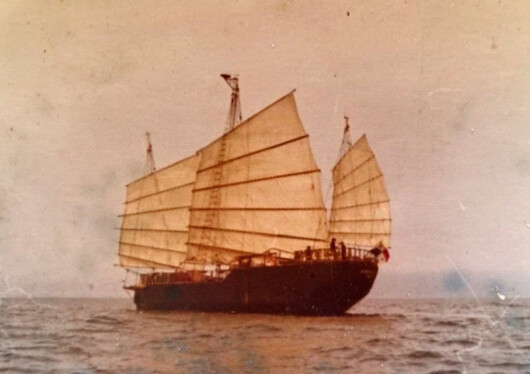
1975 Under full sail
Why Build a Ship?
Among the projects being considered, one idea stood apart.
Institute co-founder John Allen proposed that the next synergetic project should be a ship. An oceangoing vessel would allow Institute members to understand the planet from a perspective impossible on land. Without engaging directly with the world’s oceans, ecological understanding would remain incomplete.
As science fiction writer Arthur C. Clarke observed: “How inappropriate to call this planet Earth, when it is quite clearly Ocean.”
Institute members were also influenced by Buckminster Fuller, whose book Operating Manual for Spaceship Earth suggested that only great maritime cultures had truly possessed a planetary perspective. Land-based societies often remained provincial; a ship could provide a broader understanding of the interconnected systems of Earth. Ecologists, artists, engineers and thinkers within the Institute decided to build their own vessel—a floating Synergia that would eventually become the Research Vessel Heraclitus.
Designing a Floating Synergia
At the drafting room of Synergia Ranch in New Mexico, a small design team including John Allen, Randall Gibson, Phil Hawes, and Bill Dempster immersed themselves in books on sailing ships, navigation and naval design. The vision was not merely to build a boat, but to create a floating community dedicated to exploration, learning and ecological research—a modern version of the ancient sea peoples.
Choosing Ferro-Cement
One of the first major decisions was the choice of construction material. The team selected ferro-cement because it was inexpensive, durable and repairable. If damage occurred, divers could perform underwater repairs using epoxy, making the vessel particularly practical for remote expeditions. Ferro-cement also lent itself to labor-intensive construction, allowing volunteers to contribute directly to the building process.
Before construction began, Institute members undertook a series of training projects at Synergia Ranch to master the material. These included:
- Shower facilities
- The small geodesic dome
- Roof structures
- Repairs to the yellow dome
Even repairing the canvas covering of the yellow dome served as valuable training for future sail repairs.
Learning Celestial Navigation
A ship also required navigators. Bill Dempster immersed himself in the art of celestial navigation, learning how sailors had determined their position for centuries by measuring the angles between stars and the horizon using a sextant.
He soon began teaching others through courses and demonstrations at Synergia Ranch. One demonstration became legendary. To illustrate the difficulty of taking accurate sextant readings aboard a moving vessel, Bill practiced celestial navigation while being pushed around the Ranch at night in a wheelbarrow. The sight of a navigator carefully taking star readings while bouncing through the darkness became an unforgettable image for everyone present.
Building the Ship in Oakland
In the late spring of 1974, a group of Institute members and synergists departed Synergia Ranch aboard the converted school bus used by the Theater of All Possibilities and drove to Oakland, California. There, construction of the ship began. The Heraclitus would be a floating Synergia—a home for a contemporary community of ocean-going explorers who would live with and on the sea.
A Rent-Free Shipyard
Consistent with the Institute’s philosophy of resourcefulness, the construction team secured a rent-free site adjacent to a concrete mixing company near Oakland’s Fifth Avenue Marina. Housing was equally creative. A dozen or more builders lived free of charge in the large Berkeley home of Bill Dempster’s mother. Later, some moved into inexpensive and rudimentary structures near the construction site known affectionately as “Fu-Shu’s Cabins,” named after a slumlord character in Bertolt Brecht’s The Good Person of Szechwan. Others camped in nearby sand dunes.
The Junkman’s Palace
To raise funds and attract volunteers, the builders opened a café called The Junkman’s Palace on Telegraph Avenue in Berkeley. Each day, the old theater bus would travel down Telegraph Avenue announcing opportunities to learn how to build a sailing ship. Many people climbed aboard; some stayed for a day, others for a week. Some became long-term participants in one of the most unusual shipbuilding projects of its era.
Salvage, Ingenuity and Volunteer Labor
To reduce costs, Bill Dempster led expeditions to recover materials from buildings scheduled for demolition.
Valuable old-growth lumber was salvaged and transformed into scaffolding and construction materials for the ship. Every task possible was performed by volunteers rather than hired contractors.
Crew members:
- Bent rebar to the ship’s curves
- Installed wire mesh
- Sewed sails
- Installed engines
- Built the rudder
- Fabricated fittings
- Constructed support structures
Even the engine reflected this philosophy—a second-hand General Motors automobile engine was adapted for marine use.
Launching the Heraclitus
Construction proceeded at an extraordinary pace.
Despite long days, demanding physical labor and limited financial resources, the vessel was completed in less than a year.
Milestones
- Keel laid: August 1974
- Launch: 24 February 1975
- Construction period: Approximately nine months
- Builders: 15–20 volunteers
- Initial capital investment: Approximately $80,000, lent by Randall Gibson and eventually repaid.
Remarkably, the builders also found time during construction to create and perform theatrical productions throughout the Bay Area through the Theater of All Possibilities. The RV Heraclitus was launched in February 1975 and soon began what would become decades of exploration around the globe.
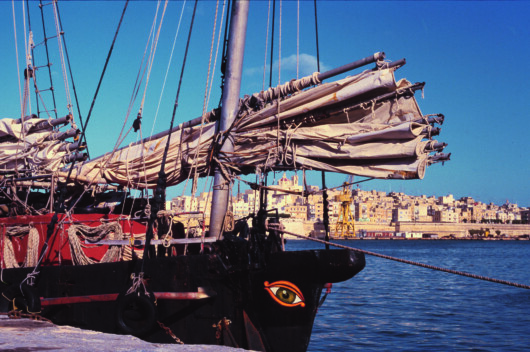
A Different Kind of Research Vessel
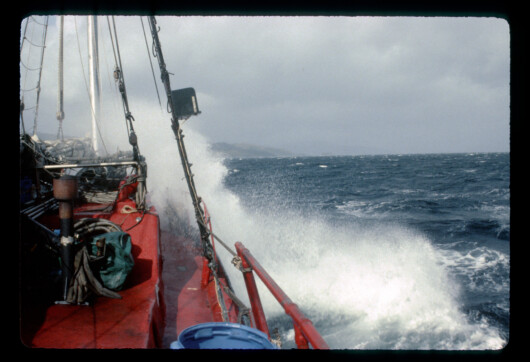
The Heraclitus was never intended to be a conventional research vessel. Its operating model reflected the principles of ecotechnics. Scientific work, education, culture, exploration and practical seamanship were integrated into a single enterprise. Crew members participated directly in research activities, learning whatever skills were necessary to contribute. Volunteers worked alongside experienced researchers, and sail power was used whenever possible to reduce costs and fuel consumption. This approach enabled scientific exploration at a fraction of the cost of conventional research vessels.
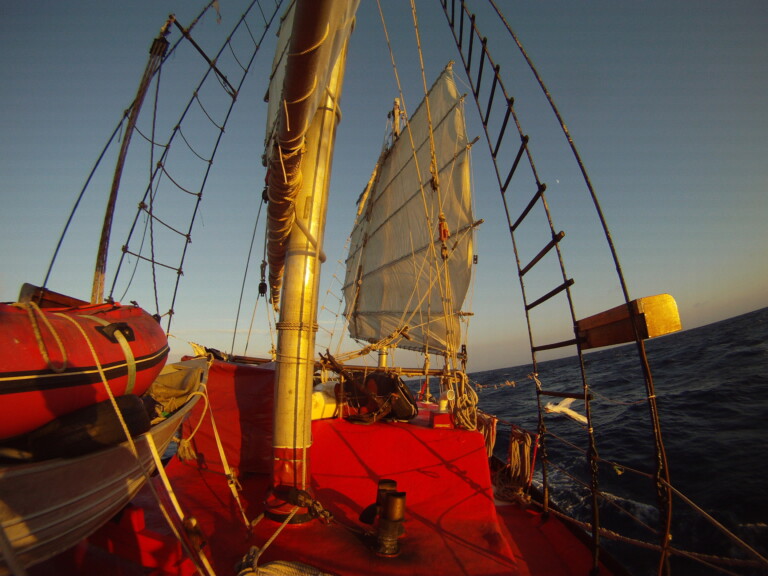
Partnership with NOAA
In 1978, before its first Atlantic crossing, the Heraclitus entered into a cooperative agreement with the National Oceanic and Atmospheric Administration (NOAA).
Throughout its voyages, the vessel collected:
- Weather observations
- Wind data
- Cloud measurements
- Temperature readings
- Rainfall records
Because the ship frequently sailed through remote regions seldom visited by research vessels, these observations added valuable information to global weather databases and complemented land-based meteorological stations.
The Amazon Expedition (1980–1982) – A Call from Richard Evans Schultes
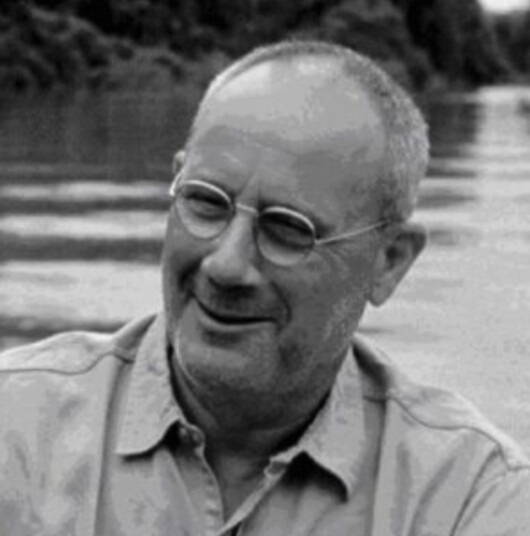
One of the most influential expeditions in the vessel’s history began at the Institute of Ecotechnics Jungle Conference in Penang, Malaysia in 1979. There, the renowned Harvard ethnobotanist Professor Richard Evans Schultes, widely regarded as the father of modern ethnobotany, urged the crew to travel to Amazonia and continue exploring its extraordinary botanical wealth and indigenous knowledge systems. The crew accepted the challenge.
Photo courtesy of Synergetic Press https://synergeticpress.com/pages/authors-editors/richard-evans-schultes
From Malaysia to the Amazon
Departing Penang in January 1980, the Heraclitus retraced its route through:
- The Red Sea
- The Mediterranean
- The Atlantic Ocean
Nearly a year later, in December 1980, the ship arrived at Belém, Brazil at the mouth of the Amazon River. Joined by a Brazilian naval officer, the crew transformed the vessel’s sails into a combined sun shelter and rainwater catchment system before beginning the long upriver voyage toward Peru.
A Floating Phytochemical Laboratory
The expedition received a special Peruvian convenio authorizing botanical collection. To support the work, Dr. Laurent Rivier and Dr. Bo Holmstedt helped design a phytochemical laboratory onboard the vessel.
The laboratory allowed researchers to:
- Analyze plant compounds in the field
- Preserve specimens
- Investigate medicinal properties
- Prepare collections for future scientific study
This transformed the Heraclitus into a floating ethnobotanical research station deep within the Amazon Basin.
Iquitos, Pevas and Beyond
After traveling approximately 2,200 miles up the Amazon, the vessel reached Iquitos, Peru, where it underwent maintenance in the Peruvian Navy’s floating dry dock on the Rio Nanay. The expedition then continued to Pevas, a village associated with Schultes’ earlier fieldwork. There, a local shaman who had assisted Schultes in collecting botanical specimens agreed to share his knowledge with the Heraclitus crew and guide them through the rainforest.
Wade Davis, Dennis McKenna and Terence McKenna
As the expedition progressed, a remarkable group of researchers joined the vessel, including:
- Wade Davis
- Dennis McKenna
- Terence McKenna
Together with local knowledge holders, they participated in ethnobotanical investigations throughout the region. The expedition concluded with a journey up the tiny Rio Ampiyacuto to the remote village of Brillo Nuevo, where the collecting crew attended an all-night seasonal ritual dance festival, providing rare insight into the cultural traditions of the region.
Scientific Legacy
The expedition collected hundreds of plant specimens, including previously undescribed species, while documenting traditional knowledge associated with their uses.
Specimens were deposited in:
- University herbaria in Iquitos and Lima
- Missouri Botanical Garden
- New York Botanical Garden
- Royal Botanic Gardens, Kew
- Institute of Ecotechnics Herbarium (later donated to Southern Cross University, Australia)
The expedition remains one of the most significant ethnobotanical journeys undertaken by the vessel.
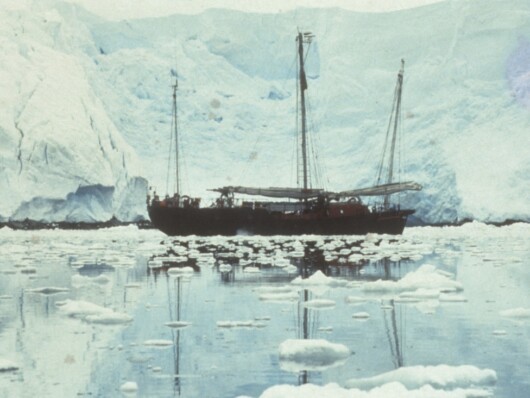
Since the early 1990s, with some breaks, Captain Claus Tober has provided steady leadership aboard the RV Heraclitus, while Christine Handte has served as Expedition Chief on several major expeditions. For more than three decades they have been among the vessel’s most dedicated expeditioners, helping to guide its scientific missions, educational programs and global voyages while maintaining the unique culture of learning, exploration and ecological inquiry that has defined the Heraclitus since 1975.
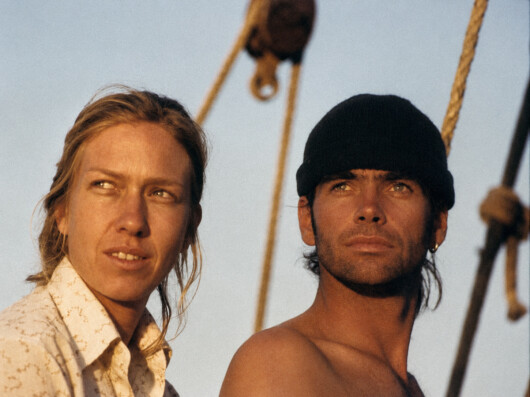
Nearly Fifty Years at Sea
Since 1975, the RV Heraclitus has:
- Sailed approximately 270,000 nautical miles
- Traversed six oceans
- Traveled farther than the distance from Earth to the Moon
- Conducted thirteen major expeditions
- Supported citizen science initiatives
- Collected marine and meteorological data
- Worked with Traditional Ecological Knowledge holders around the world
- Explored adaptive ecological and cultural solutions to planetary challenges.
Throughout these voyages, the vessel has served as a bridge between science, culture, ecology and exploration.
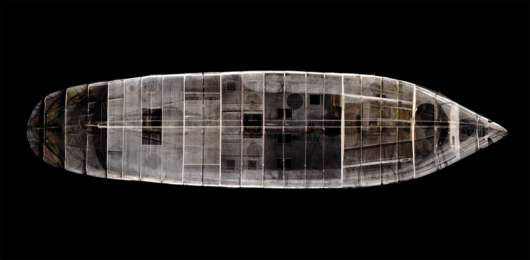
A Scan of the RV Heraclitus
Rebuilding for the Next Era
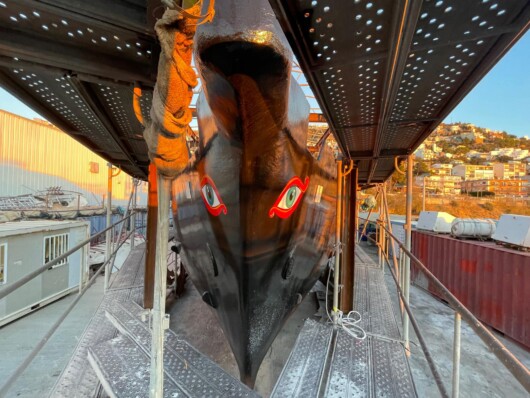
After nearly fifty years of service, the RV Heraclitus is currently undergoing a complete reconstruction in Roses, Catalonia, Spain.
Being rebuilt from the keel upward, the vessel is preparing for a new chapter of planetary exploration. The mission remains unchanged: to connect people, cultures, ecosystems, and knowledge systems through direct experience of the world’s oceans and coasts and to demonstrate that scientific inquiry, cultural exchange, and ecological stewardship can flourish together aboard a single ship.
Photo of RV Heraclitus below in drydock, Roses, Catalonia, by Christine Handte.