Growing giants: Hybrid Mahogany, Sustainable Forestry in Puerto Rico.
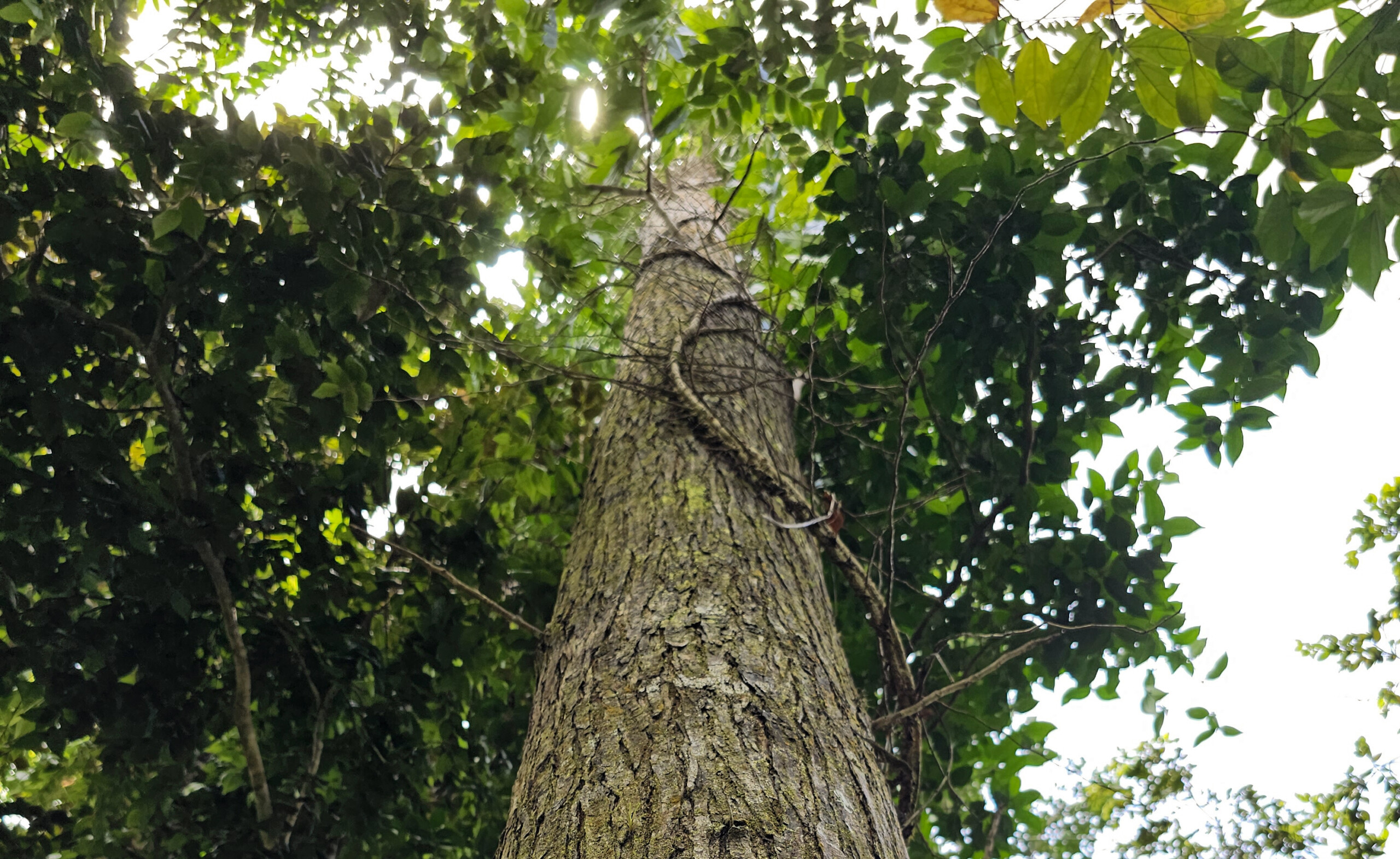
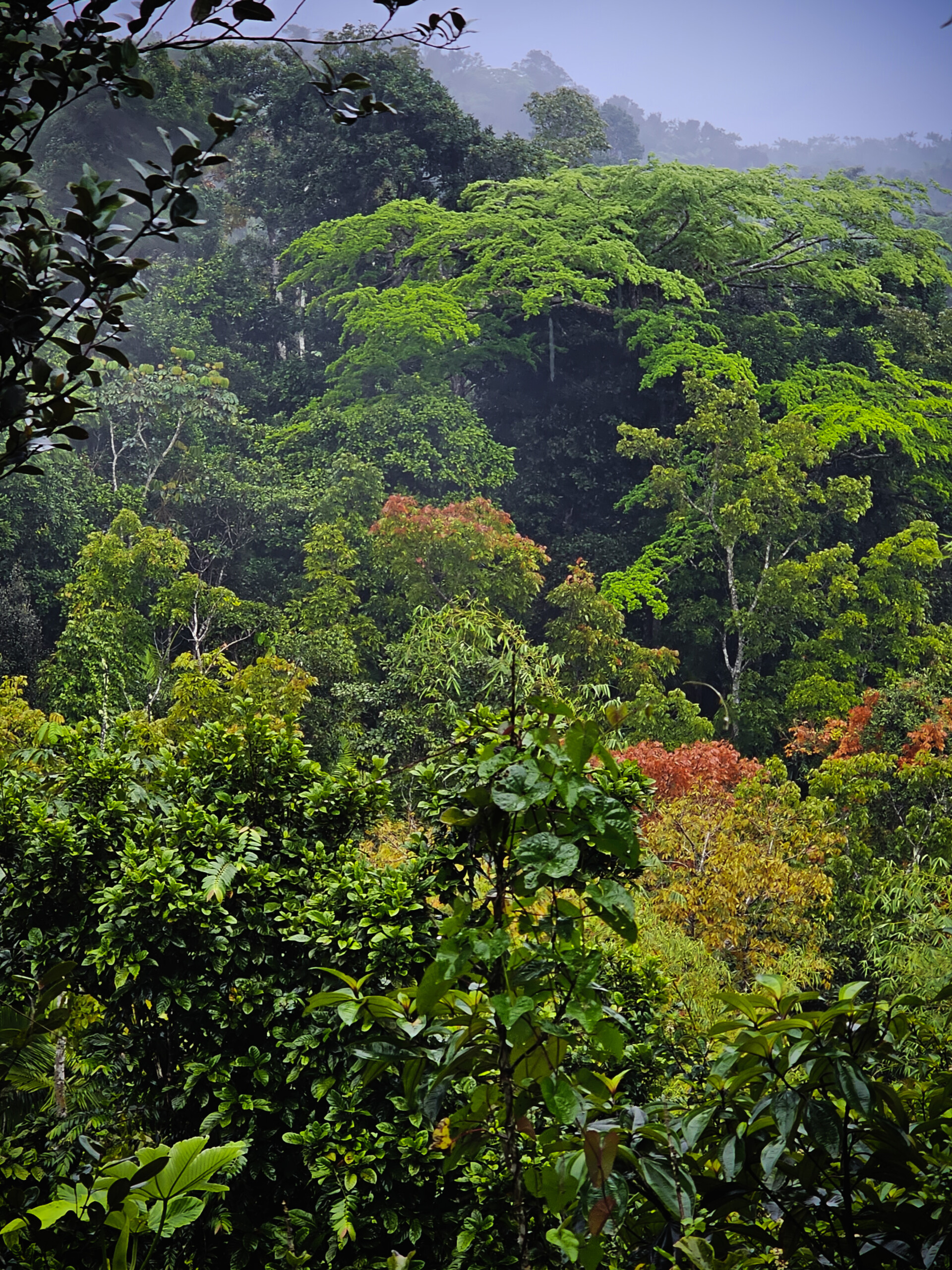
High in the mountains of southeastern Puerto Rico, among the mist, streams, and recovering rainforest of Las Casas de la Selva, stand elegant rows of towering mahogany trees. Their straight trunks rise through the canopy, some exceeding 30 meters in height after approximately 40 years of growth. These trees are Swietenia × aubrevilleana, a hybrid mahogany created from Caribbean mahogany (Swietenia mahagoni) and big-leaf mahogany (Swietenia macrophylla), and they represent far more than a successful forestry experiment. They tell a story of patience, innovation, ecological stewardship, and a vision that forestry and conservation can work hand in hand.
Today these trees are among the most striking features of the Las Casas Sustainable Forestry Project in Patillas. Yet their story began decades ago, when a group of foresters, ecologists, and environmental visionaries set out to answer a simple but important question: could tropical forests produce valuable timber while becoming more ecologically diverse and resilient?
A Different Approach to Forestry
When the Las Casas project began in the early 1980s, much of tropical forestry around the world relied on clear-cutting forests and replacing them with monoculture plantations. These systems often produced timber efficiently but frequently came at the expense of biodiversity, watershed protection, and long-term ecological health.
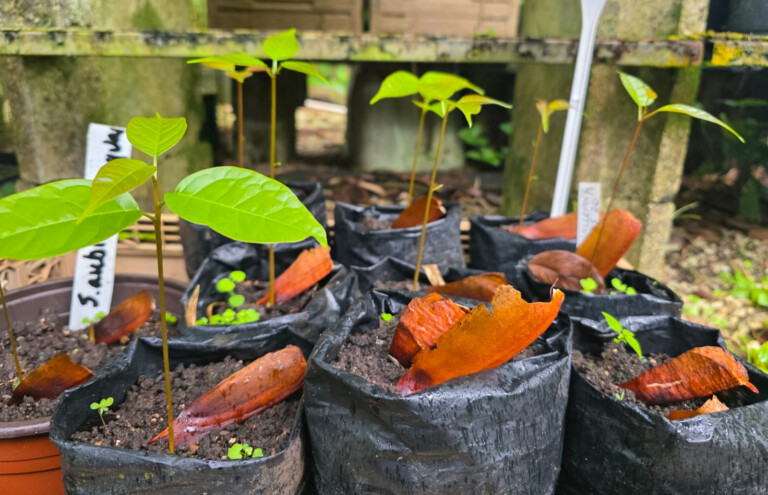
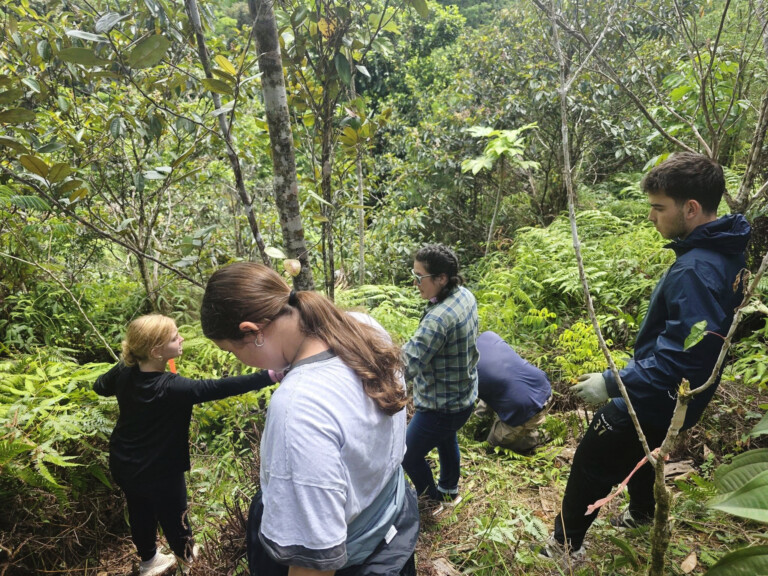
The founders of Las Casas believed there was another way.
The property, located in the Sierra de Cayey mountains near Patillas, consisted largely of secondary forest recovering from generations of agriculture and land clearing. Rather than remove the regenerating forest, the project sought to work within it. The goal was not simply to grow trees but to restore forest ecosystems while demonstrating that sustainable timber production could contribute to conservation rather than conflict with it. This philosophy became one of the defining principles of Las Casas de la Selva and remains central to its identity today.
The Origins of Line Planting
The forestry system adopted at Las Casas is known as line planting, a technique developed for use in tropical forests where maintaining ecological integrity is a priority. Unlike conventional plantations, where all existing vegetation is cleared before planting, line planting retains most of the forest. Narrow corridors are opened through secondary vegetation, and desired tree species are planted along these lines. At Las Casas, the planting lines were generally spaced approximately ten meters apart, with individual trees planted about three meters apart within each line.
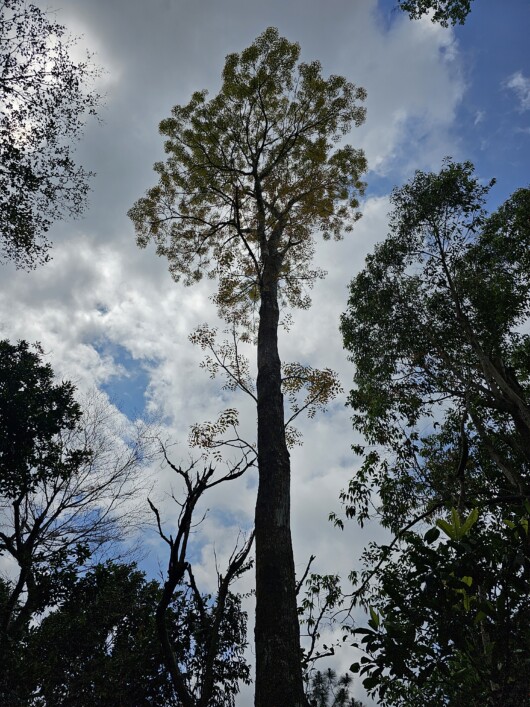
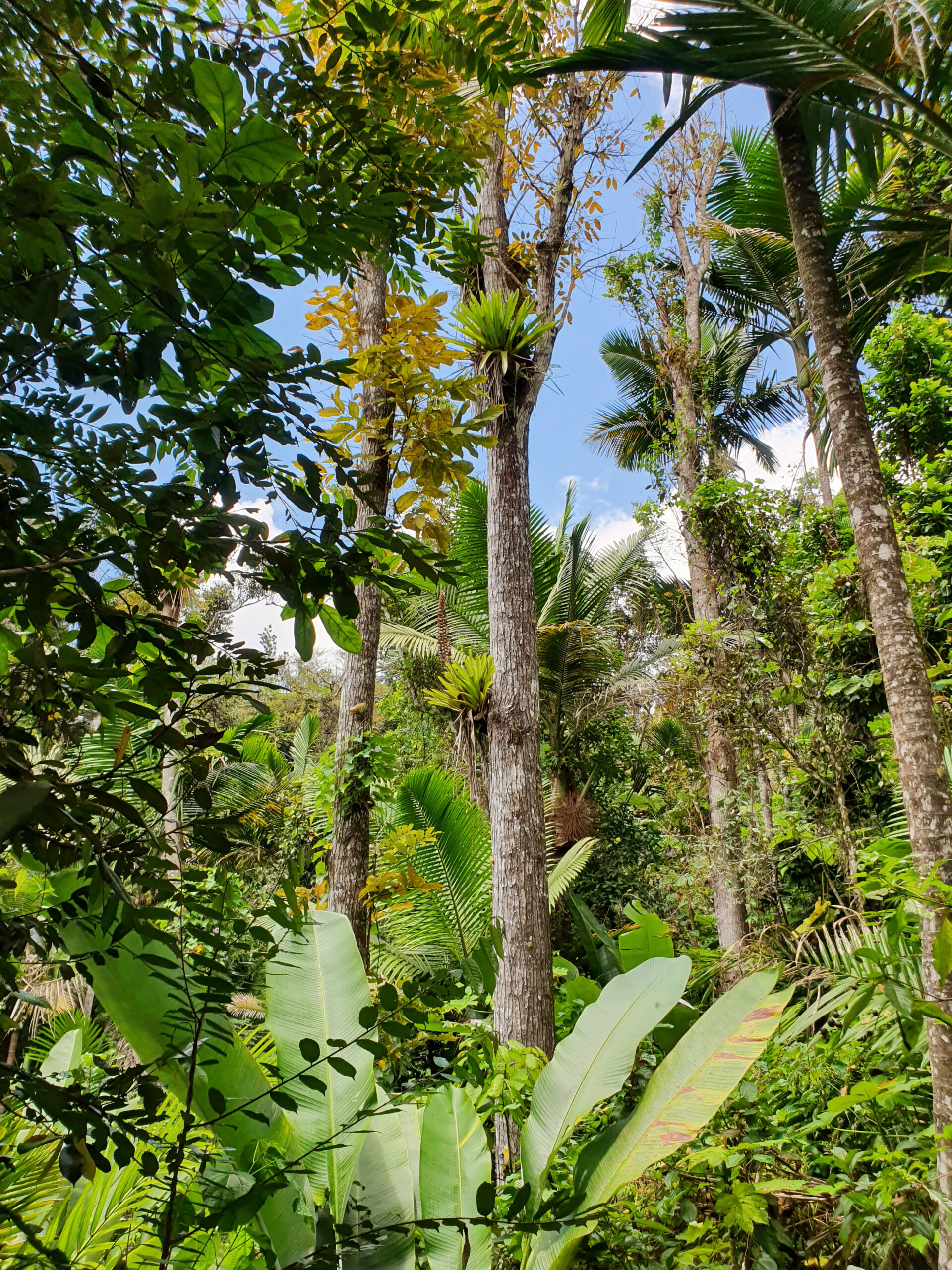
This approach offered several advantages. The surrounding forest continued to provide wildlife habitat, stabilize soils, protect watersheds, and support natural ecological processes. At the same time, the planted trees received sufficient light and reduced competition during their early years of growth.
The result was a forestry system that functioned more like a forest than a plantation.
Beginning in the mid-1980s, approximately 300 acres were established using this method. More than 40,000 seedlings were planted, including mahogany, blue mahoe (Hibiscus elatus), and other valuable timber species. Thousands of additional trees were later added by volunteers, researchers, and students who participated in the project over the following decades.
What made Las Casas unique was its willingness to think on a timescale measured in decades.
The success of the project could not be judged after a few years. The trees would need time to grow, and the forest would need time to respond.
Why Hybrid Mahogany?
Among the many species planted at Las Casas, Swietenia × aubrevilleana quickly attracted attention.
Mahogany has long been regarded as one of the world’s most valuable tropical hardwoods. However, throughout Puerto Rico and much of the Neotropics, foresters face a significant challenge when growing mahogany: the Mahogany Shoot Borer (Hypsipyla grandella).
This notorious moth attacks young mahogany trees during their most vulnerable years. The larvae bore into the terminal shoot—the central growing stem of the sapling. Once damaged, the tree loses its dominant leader and is forced to branch or bifurcate. Instead of producing a straight trunk suitable for high-quality timber, the tree develops multiple stems and a distorted form. For generations, the Mahogany Shoot Borer has been one of the greatest obstacles to successful mahogany forestry throughout tropical America.
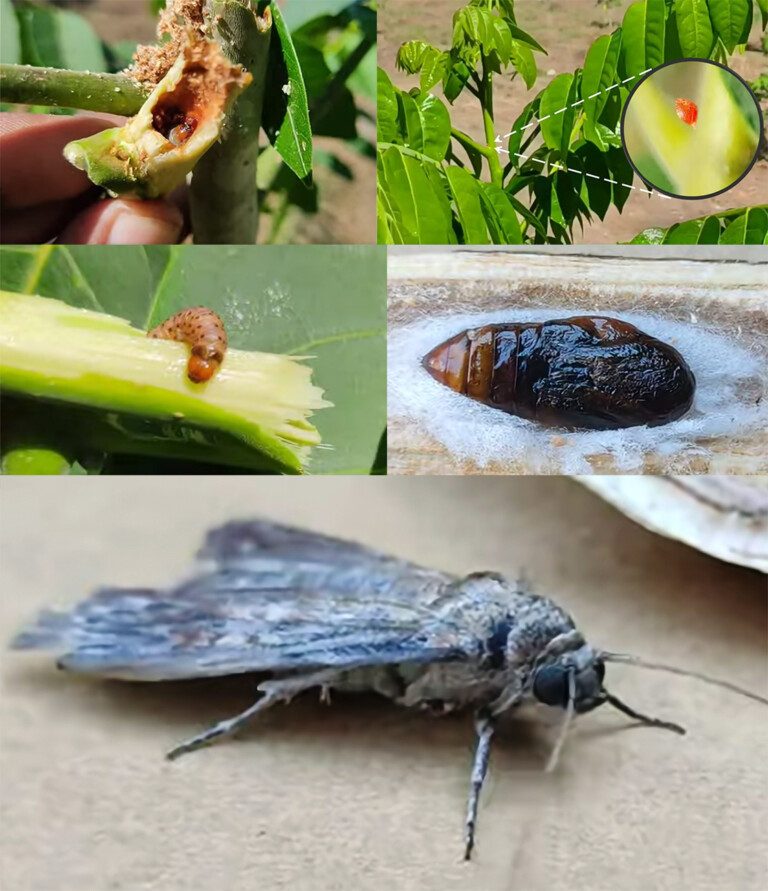
Credits for Hypsipyla grandella images: https://www.facebook.com/celezfigueroa/videos/314057883795102/
While neighboring mahogany species often suffered significant shoot borer damage, Swietenia × aubrevilleana showed remarkable resistance or tolerance. The trees maintained strong apical dominance and continued growing upward without the severe forking that commonly affects other mahogany species.
This characteristic made the hybrid particularly attractive to foresters. It combined the desirable timber qualities of both parent species with vigorous growth, excellent form, and an apparent ability to avoid one of the most destructive pests affecting mahogany cultivation. More than three decades later, the results remain visible throughout the Las Casas plantations. The tall, straight trunks standing today are living evidence of the hybrid’s success.
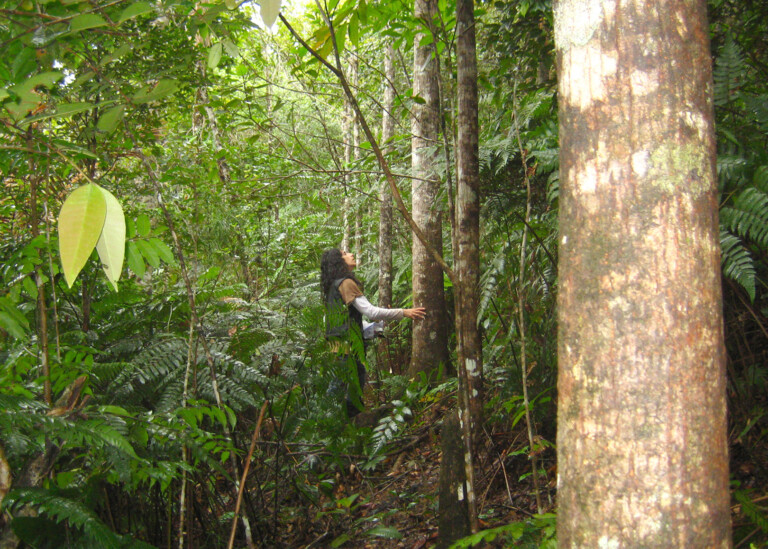
L: Las Casas de la Selva project director, 3t Vakil, in a row of line-planted mahogany, the trees approximately 23 years old.
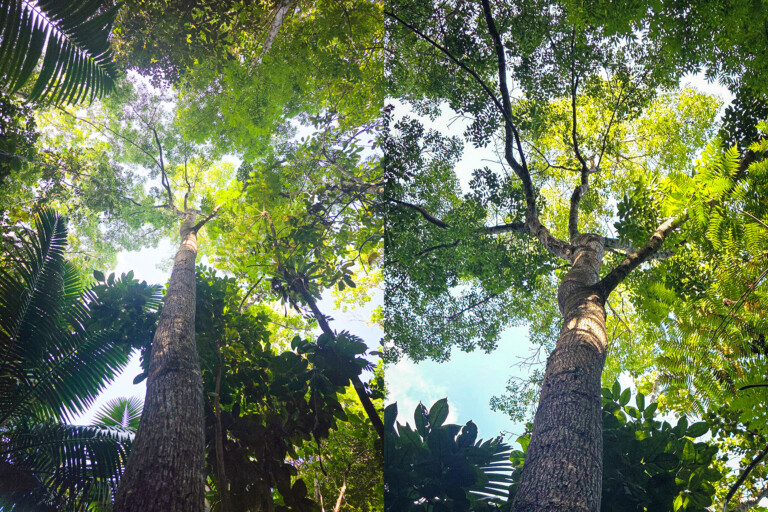
R: Mahogany trees in 2026, approx 40 years old.
A Forest That Recovered Around the Trees
Perhaps the most remarkable outcome of the Las Casas project was not the growth of the mahogany itself but the recovery of the surrounding forest.
As the planted trees matured, the forest continued to regenerate naturally. Native species colonized the understory and canopy. Wildlife populations expanded. Streams remained shaded and protected. Ferns, orchids, bromeliads, fungi, insects, reptiles, amphibians, and birds found habitat within the evolving forest structure.
Scientific research conducted at Las Casas helped document this process. Studies examining amphibians, tree diversity, and forest structure found that the line-planted areas retained many characteristics of healthy tropical forests. Rather than becoming simplified plantations, the sites developed into complex forest ecosystems that supported substantial biodiversity.
The project demonstrated that tropical forestry and conservation need not be opposing objectives. Timber production could occur while ecological processes continued to function. Forests could remain productive while still providing habitat, protecting water resources, storing carbon, and supporting scientific research.
This was a significant finding at a time when many viewed forestry and conservation as fundamentally incompatible activities.
Lessons in Patience and Stewardship
Forestry is often described as the art of thinking beyond one’s own lifetime.
A person may plant a tree knowing they will never see it reach maturity. The benefits of forestry frequently emerge decades after the initial work has been completed.
At Las Casas, this long perspective became one of the project’s most valuable lessons.
The hybrid mahoganies standing today are the result of decisions made in the 1980s by people who believed in the future. They invested time, labor, resources, and hope into a project whose outcomes would only become fully visible decades later.
Visitors walking through the plantations today can see the rewards of that patience. The tall trunks, recovering forest, and thriving ecosystem all testify to the value of long-term stewardship.
The project reminds us that meaningful environmental work often unfolds slowly. Restoration is not measured in months. Sustainable forestry is not measured in annual harvests. Forests operate according to their own timescales, and successful management requires an appreciation of those rhythms.
The Inspiration for Puerto Rico Hardwoods
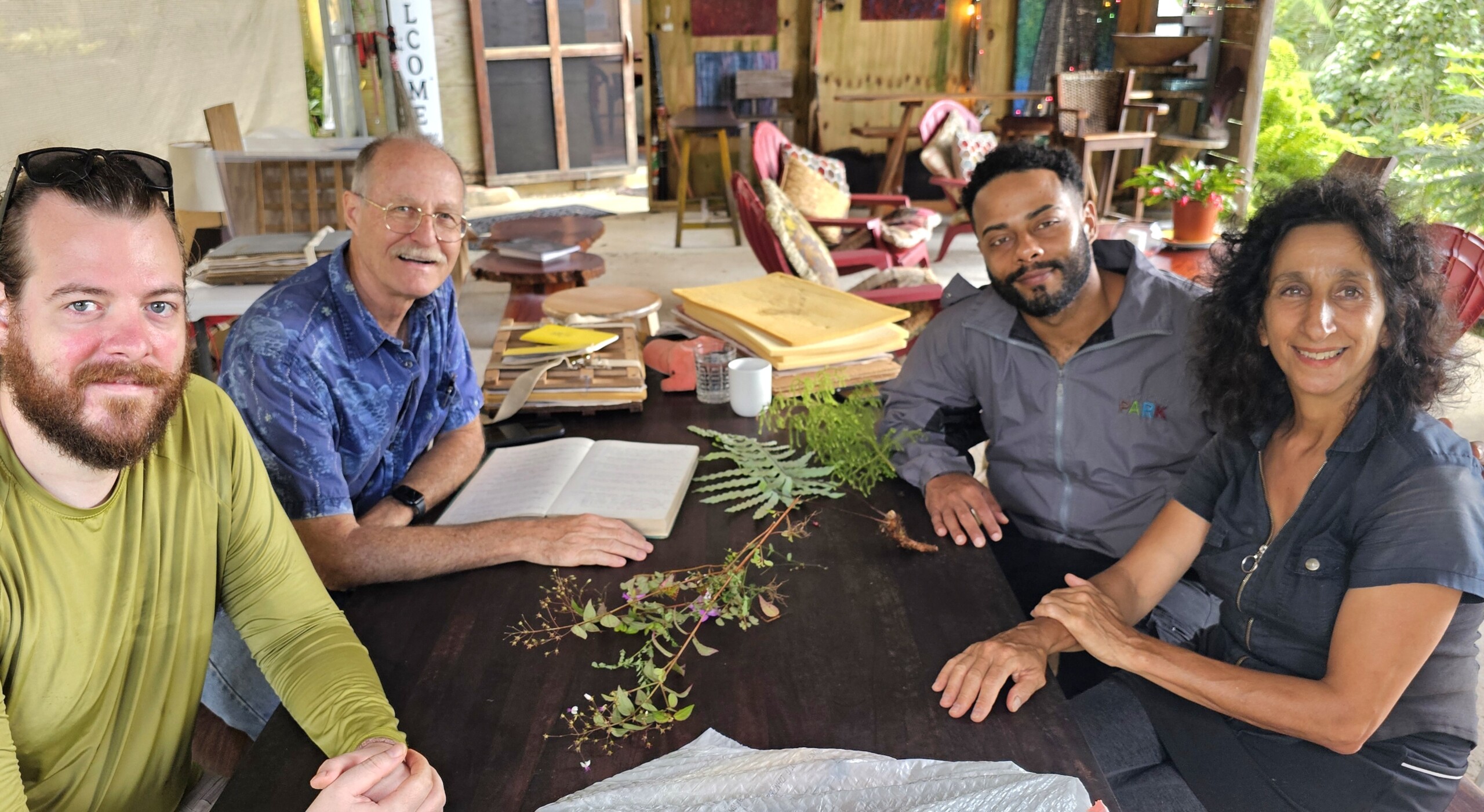
The influence of Las Casas extended well beyond the boundaries of the rainforest. Years later, the experiences gained through the forestry project helped inspire the creation of Puerto Rico Hardwoods (PRH), by Las Casas directors, 3t Vakil and Andrés Rúa.
Before PRH became known for recovering hurricane-felled trees, salvaging urban hardwoods, and supplying locally sourced timber to woodworkers and artisans, its founders were learning about forests at Las Casas. They were observing how trees grow, how wood develops over time, and how forestry decisions affect landscapes decades into the future. Between 2002 and 2016, they practiced tree-felling, hauling, milling, drying and marketing wood.
The lessons were profound. Wood was no longer viewed simply as a commodity. It became the final chapter in a much longer story that began with soil, rainfall, sunlight, ecology, and stewardship. This perspective continues to shape PRH today.
Whether recovering a tree removed for public safety, salvaging timber after a hurricane, or milling locally grown hardwoods, the company approaches wood as a renewable resource whose value extends beyond the board itself. Every log represents years of growth and a connection to the landscape from which it came.
The traceability practices embraced by PRH—the ability to identify a tree’s species, location, and story—reflect lessons first learned in the forests of Patillas.
A Living Legacy
Today, more than forty years after the first planting lines were established, Las Casas de la Selva remains a living experiment in sustainable forestry.
The hybrid mahoganies continue to grow. Researchers continue to study the forest. Students, volunteers, artists, conservationists, and visitors continue to learn from the landscape. The forest itself continues to evolve, shaped by hurricanes, climate, natural succession, and human stewardship. The success of the project offers an important lesson for the future.
Forests do not have to be viewed solely as wilderness preserves or sources of raw materials. They can be both ecologically rich and economically productive. They can support conservation, education, research, recreation, and sustainable forestry simultaneously.
The tall trunks of Swietenia × aubrevilleana rising through the rainforest canopy stand as powerful symbols of that possibility. They remind us that some of the most important environmental achievements begin with a simple act of faith: planting a tree and believing that future generations will benefit from the decision. More than three decades after they were planted, these graceful giants continue to demonstrate that forestry and conservation are not opposing paths. When guided by patience, science, and stewardship, they can become one and the same.
3t Vakil 2026