Contemplating, as I frequently do, how modern humans relate to the biosphere, I often reach for reasons to be optimistic. Yes, optimism is a yoga; you have to work at it but doing so has its rewards, physical and spiritual.
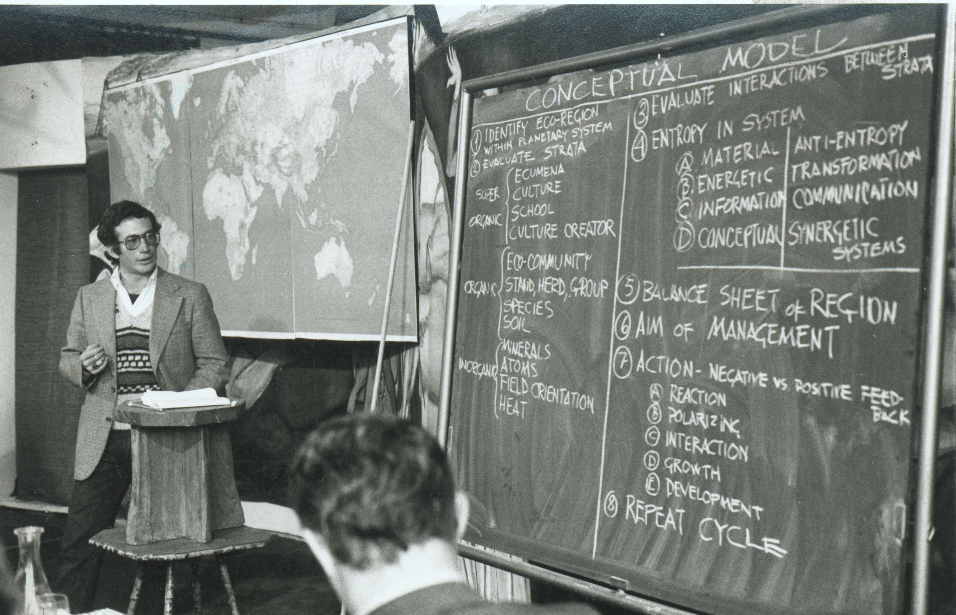
William S. Burroughs, the brilliant avant-garde writer, spoke at the 1980 Institute of Ecotechnics conference, “Man, Earth and the Challenges.” His theme: an update to the “Four Horsemen of the Apocalypse.”
His talk included memorable insights. “The subject of the experiment, in this case, human beings, can to some extent control the conditions, but this is less an advantage than it might seem, because they cannot control themselves…And stupidity and short-sighted self-interest may well swamp planet Earth before the horsemen have time to saddle up…the first thing that would impress a visitor from outer space would be the tremendous, inexplicable gap between [human] potential and performance…I’m advancing the theory that we were not biologically designed to stay in our present stage any more than the tadpole is designed to remain a tadpole. The human artifact is in the state of neoteny…an organism fixated at what would normally be a larval or transitional phase.”
I take his words as hopeful although William told us listening to all the other conference speakers, that he’d come up with a title for the novel he was working on: “Earth – The Place of Dead Roads.” He could be cutting and sardonic in a most understated way.
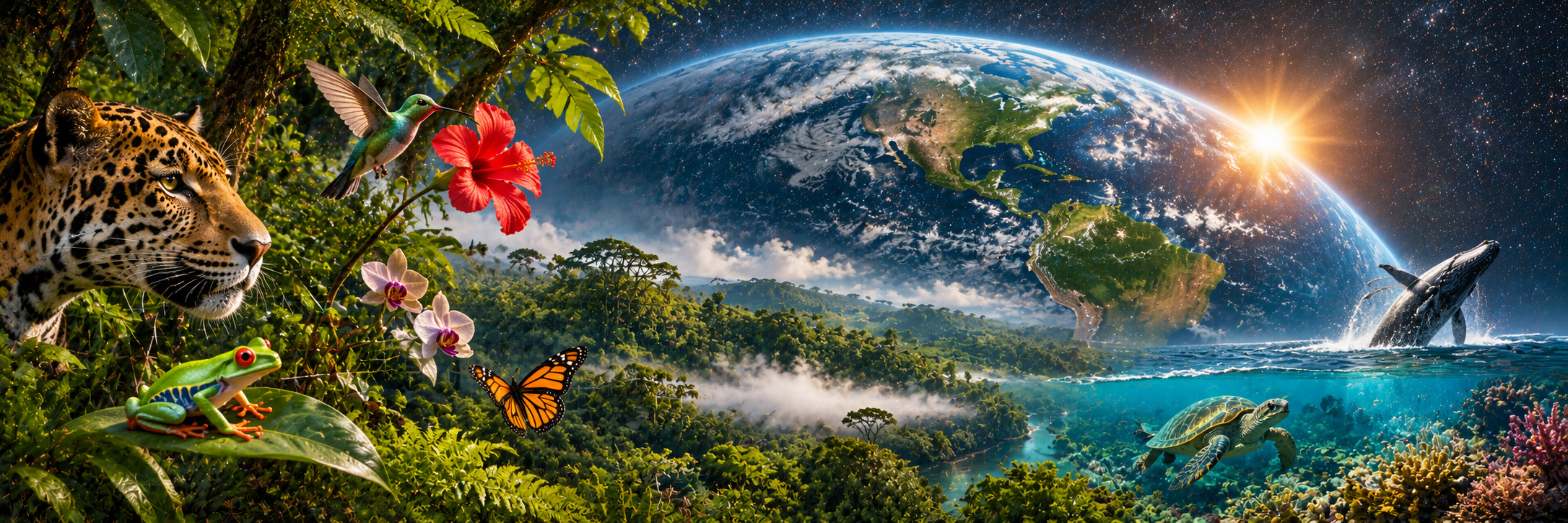
That humans are not fully realized, remain in a state of suspended development, aligns with the many spiritual traditions which describe humans’ ordinary state as being asleep, running on auto-pilot, hypnotized and distracted. To that we can add the strange delusion of modern humans that the “environment” is somehow outside of themselves and the realm of humanity. Though people now use the word biosphere, it remains an abstract concept and only rarely do people fully comprehend how inextricably and totally we are in fact participants in its material circulation. We owe every aspect of our existence and life support to the functioning of Earth’s biosphere – and our every breath, drink of water, bite of food is made possible by it.
A book written by Timothy Ferris, a famed astronomer and science writer, is entitled “Coming of Age in the Milky Way.” It traces the historical development of our knowledge of the cosmos. Galaxies were only discovered and named in the 1920s; the “biosphere” was first used 1875 and scientifically developed by Vladimir Vernadsky in the 1920s.
The Earth’s biosphere is both incredibly long-lived (3.8 billion years) and has gone through many radical transformations. These include the invention of photosynthesis to power plant/algae growth, which released oxygen and created an atmosphere wildly different from Earth’s primeval one; to marine organisms invading the land. Life in our biosphere has continued evolving and adapting so that virtually every environment now harbors life.
And now, our rambunctious species has done what no other single species could even imagine accomplishing. It’s been calculated that half of the energy that Earth receives is put to some human purpose. Animals move matter but none can approach the changes wrought by modern technology meeting the demands of over seven billion humans.
So the biosphere we must wake up to is one heavily impacted by us in ways largely unforeseen since our economy, cultures, technologies, even food-raising were developed without a deep understanding of this human-biosphere interconnection. In a way, realizing and rejoicing in our connection to the biosphere is the ultimate “outside the box” thinking, feeling and action, paradoxically making us realize we are inside the box. Like fish in water, we live in and with our biosphere even if we are blind to that reality. Not to fully understand this connection leaves us in fantasy; a fantasy now increasingly dangerous since we need a reset, an awakening to our responsibilities to protect and regenerate our living world.
This is the urgent task for us humans. Wake up and experience what we are – children of the biosphere. And like the biosphere, we individually and collectively must evolve in harmony with our biosphere or face disaster and degradation of the beauty and diversity of our world if we allow ecological damage to continue.
The Buddhist sacred texts put it this way:
“Oh, Nobly Born, you who are the son or daughter of the Buddha, Remember who you are in these times of change.
Step out of the small self, out of the body of fear, And rest in generosity and kindness of heart. Rest in your own true virtue and wisdom. Rest in the graciousness of patience,
The dedication and equanimity and compassion you share with all life. That is who you really are. Trust it, rest in your own true nature.”1
So here we are in this amazingly scary but full of possibility present moment.
Will we emerge from neoteny, from our arrested development, and truly come of age in the biosphere?
Oh nobly born, you who are the sons and daughters of the biosphere, remember that you are a biospherian, and can and must act as such, in these times of change and challenge.
1 W.Y. Evans-Wentz, The Tibetan Book of the Dead [of the Great Liberation on Hearing in the Bardo].